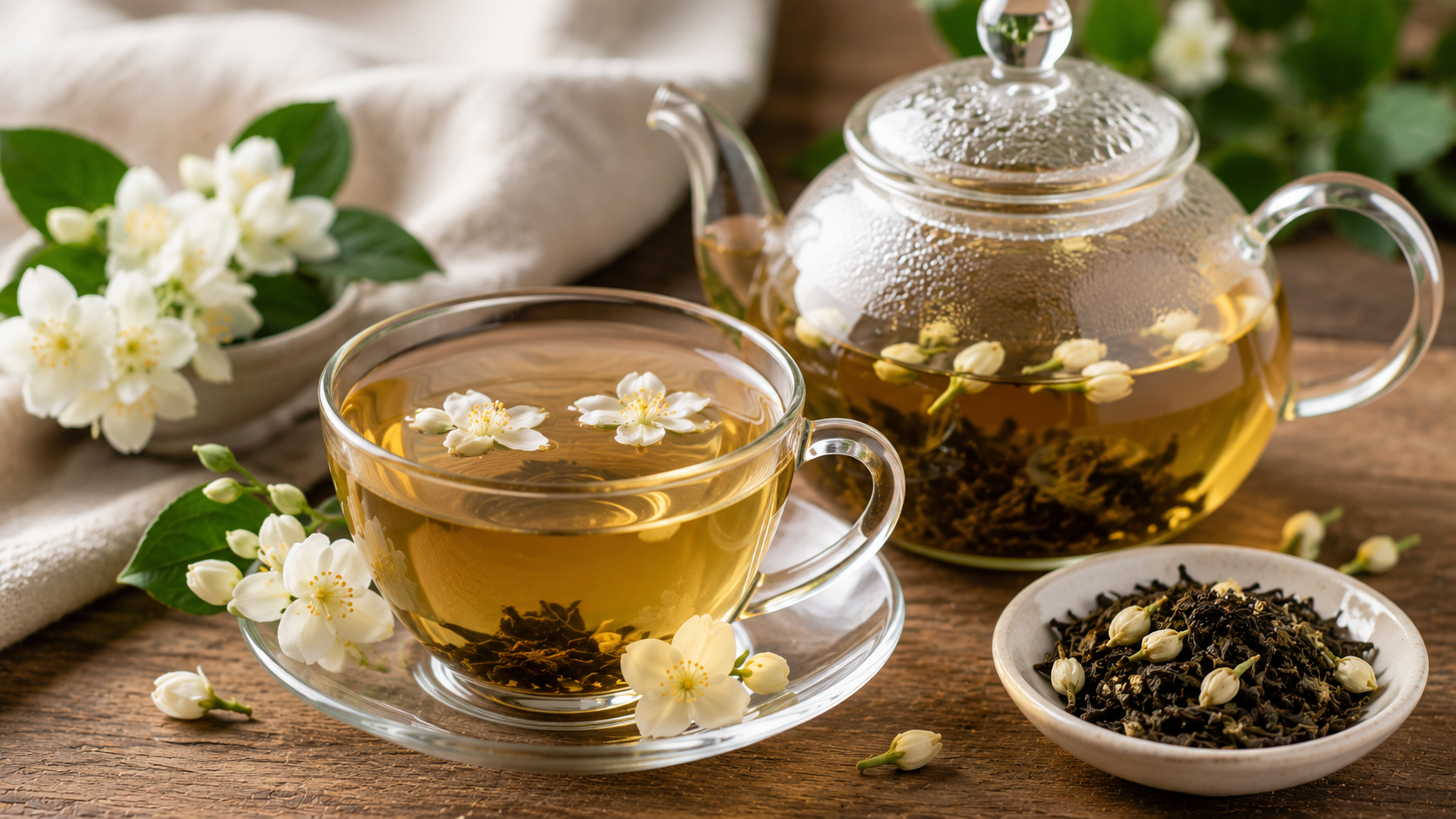
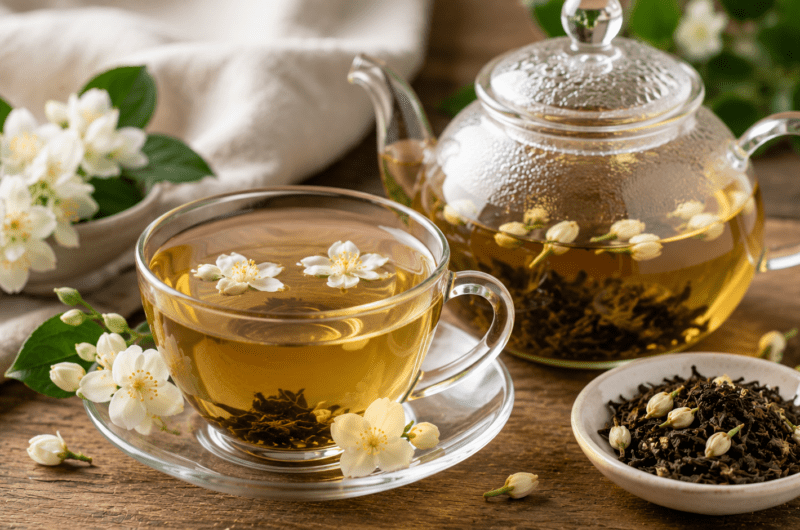
Jasmine tea is more than just a beverage; it is a fragrant experience. Traditionally made by scenting high-quality green tea leaves with fresh jasmine blossoms, this tea is prized for its delicate floral aroma, light golden color, and smooth, sweet finish. Whether you are looking for a gentle morning pick-up or a calming ritual to unwind in the evening, jasmine tea offers a perfect, balanced escape.
The Benefits of Jasmine Tea
Beyond its captivating scent, jasmine tea is a powerhouse of wellness:
- Rich in Antioxidants: Like other green teas, jasmine tea is packed with catechins, specifically EGCG, which help fight free radicals in the body.
- Stress Relief: The scent of jasmine is scientifically linked to a reduction in heart rate and feelings of anxiety, making it a fantastic aromatherapy tool for relaxation.
- Metabolic Support: Regular consumption has been associated with improved metabolic health and better blood sugar management.
Pro-Tips for the Perfect Brew
- Temperature Matters: Never use boiling water. Pouring boiling water directly over green tea leaves can “burn” them, resulting in a bitter, astringent taste. Aim for water around 80°C (175°F). If you don’t have a temperature-controlled kettle, let your boiling water sit for 2–3 minutes before pouring.
- Don’t Over-steep: Jasmine tea is delicate. Steeping it for too long will bring out unwanted tannins. Start with 2–3 minutes and taste as you go. You can always steep longer, but you cannot fix an over-extracted bitter brew.
- Choosing Your Tea: You will find jasmine tea in various forms: loose-leaf, tea bags, or even “dragon pearls” (hand-rolled leaves). Loose-leaf or high-quality pearls generally offer the most vibrant floral aroma compared to standard tea bags.
Also Read : Kadai Mushroom Recipe
The Art of Jasmine Tea
Servings
1
servingsPrep time
2
minutesCooking time
15
minutesCalories
180
kcalIngredients
1 –2 teaspoons high-quality loose-leaf jasmine tea (or 1 jasmine tea bag)
8 ounces (1 cup) filtered water
Directions
- Heat the Water: Bring filtered water to a gentle boil, then remove from the heat and let it sit for 2–3 minutes until it reaches approximately 175°F.
- Rinse (Optional): If using high-quality loose-leaf tea, you can pour a small splash of the hot water over the leaves in your cup/pot and discard it immediately. This “wakes up” the leaves and warms your vessel.
- Steep: Add the jasmine tea leaves or bag to your cup or infuser. Pour the warm water over the leaves. Cover to keep the floral aromatics from escaping.
- Time It: Let the tea steep for 2 to 3 minutes. Keep an eye on the color—it should be a light, pale yellow-green.
- Serve: Remove the leaves or tea bag immediately. Sip slowly and enjoy the natural floral fragrance.
Notes
- Re-steeping: High-quality loose-leaf jasmine tea can often be steeped 2–3 times. The second infusion often has a slightly different, softer floral character than the first.
- Additions: While jasmine tea is best enjoyed plain to appreciate its nuance, a tiny drop of high-quality local honey can enhance the sweetness.
- Cold-Brewing: For a refreshing summer treat, add 2 tablespoons of jasmine tea leaves to 1 liter of cold water. Refrigerate for 6–8 hours, strain, and serve over ice.