
Warm, deeply comforting, and incredibly wholesome, an authentic plate of Idli Sambar is one of the most beloved and nutritionally complete meals you can make. By pairing fermented lentil and rice cakes (idli) with a hearty, vegetable-rich pigeon pea stew (sambar), you create a perfectly balanced source of complete plant-based protein and gut-friendly probiotics. This combination aligns flawlessly with expert insights on the extensive health benefits of fermented foods, which aid in digestion and nutrient absorption. Packed with turmeric, tamarind, and a vibrant tempering of mustard seeds and curry leaves, this dish delivers powerful anti-inflammatory properties while keeping you energized and satisfied throughout the day.
Origin Idli Sambar
This iconic pairing is the absolute cornerstone of South Indian culinary heritage. While the exact origins are heavily debated—with some food historians tracing the steaming technique of idlis back to Indonesian influences between the 8th and 12th centuries—the dish as we know it today was perfected in the ancient kitchens of Tamil Nadu and Karnataka. Sambar, the tangy lentil stew, was historically developed in the royal kitchens of the Maratha ruler Shivaji’s son, Sambhaji. Today, this beautiful marriage of steamed cakes and spiced stew honors the rich, foundational history of Indian regional cooking, remaining a staple in millions of households and bustling street-side canteens across the globe.
Why I Love This Recipe
I love that this dish is the ultimate definition of food as medicine, yet it tastes like pure comfort. While making the idli batter requires a bit of patience for the overnight fermentation, the actual active cooking time is incredibly minimal. Once your batter is ready, the idlis steam perfectly in just 10 minutes. Sambar is a fantastic “clean out the fridge” recipe, allowing you to toss in any vegetables you have on hand, from drumsticks and carrots to pumpkin and green beans. It is naturally vegan, gluten-free, and incredibly gentle on the stomach.
Also Read : Lemon Grilled Chicken
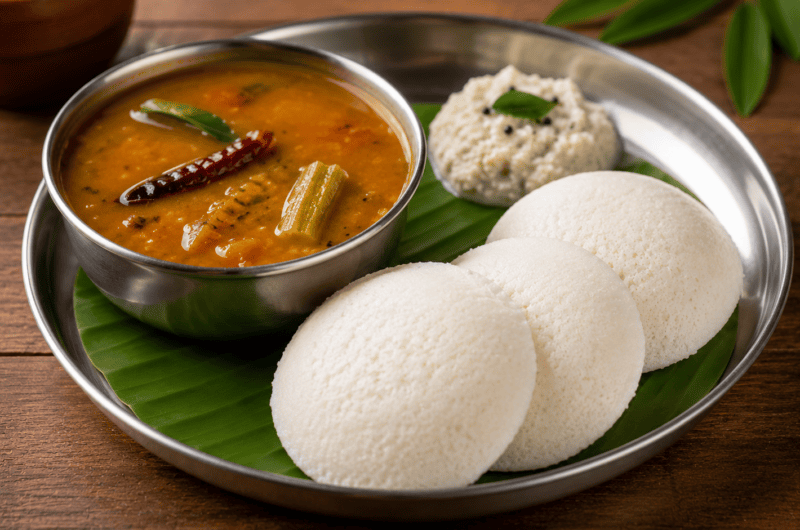
Idli Sambar
4
servings15
minutes40
minutes310
kcalIngredients
For the Idli Batter (Make ahead):
1 cup whole urad dal (husked black gram)
3 cups idli rice (parboiled rice)
1 tsp fenugreek seeds (methi)
Water for soaking and grinding
1 tsp rock salt
For the Sambar:
1/2 cup toor dal (pigeon peas), rinsed
1/4 tsp turmeric powder
1 small lemon-sized ball of tamarind (soaked in warm water to extract juice)
1 1/2 cups mixed vegetables (carrots, beans, pumpkin, tomatoes), chopped
10-12 pearl onions (or 1 medium red onion, diced)
2 tbsp sambar powder (store-bought or homemade)
1 tbsp jaggery or brown sugar
Salt to taste
Fresh cilantro for garnish
For the Sambar Tempering (Tadka):
1 tbsp sesame oil or ghee
1 tsp mustard seeds
1/2 tsp cumin seeds
1/4 tsp asafoetida (hing)
2 dried red chilies
10-12 fresh curry leaves
Directions
- Step 1: The Idlis
- Soak: Wash the urad dal and fenugreek seeds together, and soak them in enough water to cover. Wash the idli rice separately and soak it. Let both bowls sit at room temperature for 5 to 6 hours.
- Grind: Drain the water. Grind the urad dal mixture in a wet grinder or high-speed blender until fluffy and smooth, adding ice-cold water gradually. Transfer to a large bowl. Grind the rice into a slightly coarse paste. Mix the rice batter into the dal batter thoroughly by hand (the warmth of your hand aids fermentation).
- Ferment: Stir in the rock salt, cover loosely, and let the batter ferment in a warm place for 8 to 12 hours until it rises and becomes airy.
- Steam: Lightly grease idli mold plates. Gently stir the fermented batter once and pour it into the molds. Steam in an idli steamer or a wide pot for 10 to 12 minutes on medium heat. Let them rest for 2 minutes before gently scooping them out with a wet spoon.
- Step 2: The Sambar
- Cook the Dal: In a pressure cooker, cook the rinsed toor dal with the turmeric powder and 1 1/2 cups of water until completely mushy (about 4 to 5 whistles). Mash well and set aside.
- Boil the Veggies: In a large heavy-bottomed pot, add the chopped vegetables, pearl onions, and tamarind extract. Add enough water to cover the veggies and boil for 10 minutes until tender.
- Spice it up: Stir in the sambar powder, jaggery, and salt. Let it boil for another 3 to 4 minutes until the raw smell of the spices disappears.
- Combine: Pour the mashed toor dal into the vegetable mixture. If it is too thick, add a little warm water. Let the sambar simmer on low heat for 5 minutes.
- The Tempering: In a small pan, heat the oil or ghee. Add the mustard seeds and let them splutter. Add the cumin seeds, dried red chilies, asafoetida, and fresh curry leaves. Fry for 10 seconds until fragrant, then immediately pour this hot mixture over the simmering sambar.
- 10. Serve: Garnish the sambar with freshly chopped cilantro. Serve piping hot alongside the soft idlis!
Notes
- Batter Consistency: The key to soft idlis is not adding too much water while grinding. The batter should be thick but pourable, similar to pancake batter.
- Cold Climates: If you live in a cold climate and your batter refuses to ferment, leave the bowl inside your oven with just the oven light turned on. The gentle heat is perfect for fermentation.
- Instant Sambar Trick: If you are short on time, you can cook the vegetables and the dal together in the pressure cooker before adding the tamarind and spices, though boiling the veggies separately yields a better texture.