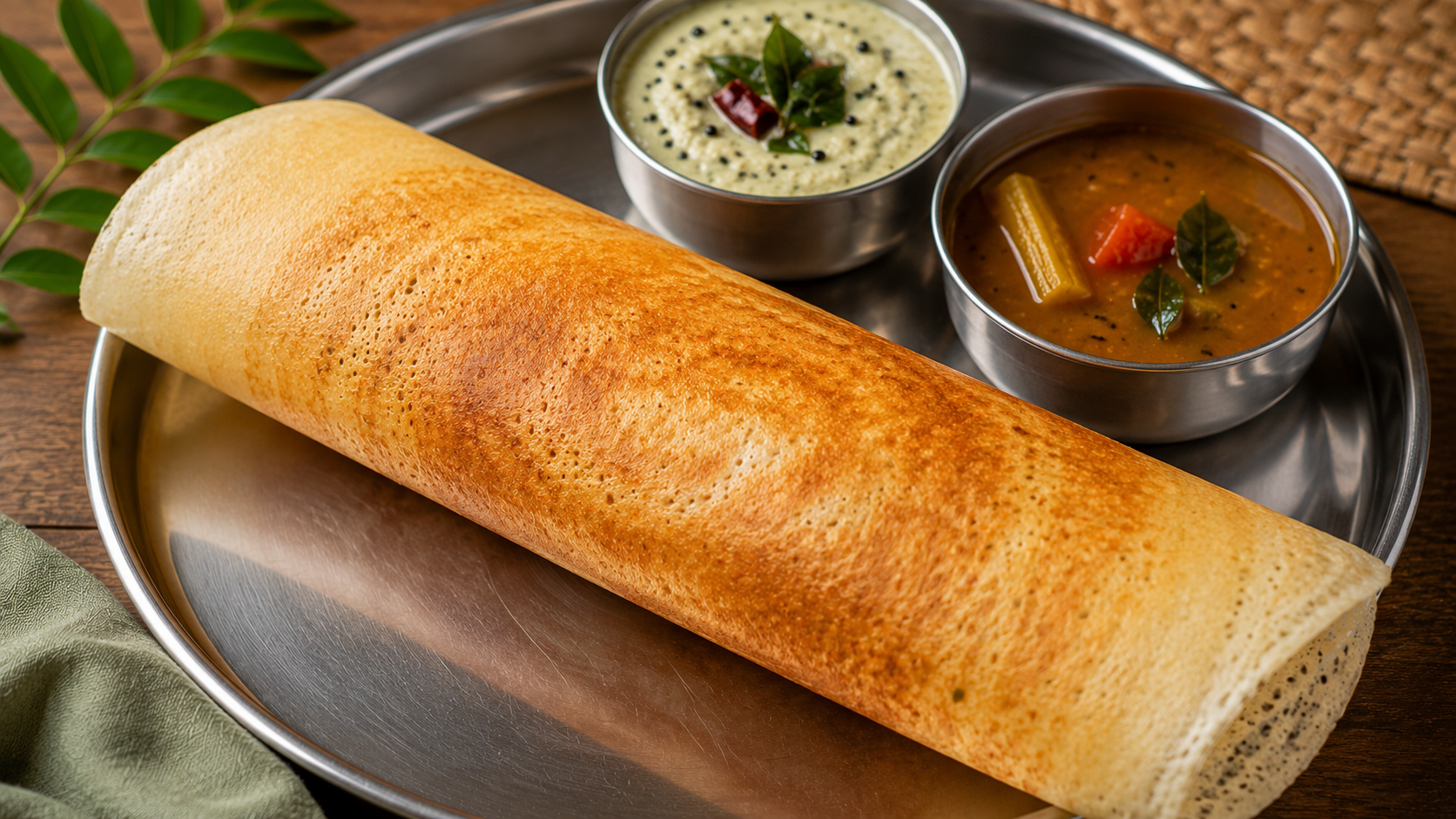
Crispy on the outside, slightly spongy on the inside, and wonderfully tangy, a freshly made Dosa is the ultimate testament to the magic of simple ingredients. By soaking and fermenting a classic combination of raw rice and protein-packed lentils, you create a naturally vegan and gluten-free batter that is highly nutritious. This natural fermentation process perfectly aligns with expert insights on the extensive gut-health benefits of fermented foods, which help improve digestion and increase the bioavailability of essential minerals. Paired with a warm bowl of sambar and fresh coconut chutney, this golden crepe transforms a humble staple into a deeply satisfying, functional meal that provides sustained, low-glycemic energy throughout your busy morning.
Origin Dosa Recipe
The dosa holds a deeply revered place in South Indian culinary heritage, with historical references tracing its existence in the Tamil country back to the 1st century AD. Originally, ancient dosas were softer and thicker (similar to modern set dosa), but as culinary techniques evolved across the Indian subcontinent, the batter was refined to produce the paper-thin, shatteringly crisp version popularized by the Udupi restaurants of Karnataka. This timeless preparation honors the rich historical ingenuity of traditional Indian food science, demonstrating how ancient cooks mastered wild fermentation long before modern wellness trends, turning basic grains into culinary gold.
Why I Love This Recipe
I love that making a classic dosa is equal parts cooking and engaging food science. While the soaking and fermenting process requires a bit of patience, the hands-on time is surprisingly minimal. Once your batter is properly fermented, it becomes a versatile powerhouse for efficient weekly meal prep strategies. A single batch of this batter can be stored in the refrigerator for up to a week, allowing you to whip up fresh, restaurant-quality crispy crepes for a quick breakfast, a light lunch, or a comforting dinner at a moment’s notice.
Also Read : Hot Honey Pizza
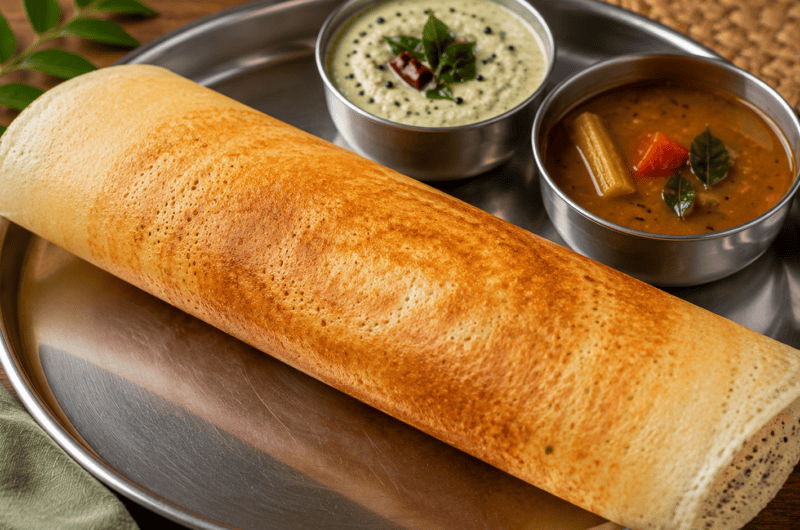
Dosa Recipe
4
servings15
minutes20
minutes140
kcalIngredients
3 cups Idli rice (or parboiled short-grain rice)
1 cup whole skinless urad dal (husked black gram)
1/2 tsp fenugreek seeds (methi)
2 tbsp thick poha (flattened rice) – optional, but helps with crispiness
Water (for soaking and grinding)
1 tsp non-iodized rock salt (or sea salt)
C old-pressed oil or ghee (for roasting the dosas)
Directions
- Soak the Grains: In a large bowl, thoroughly wash the rice 3 to 4 times until the water runs clear. In a separate bowl, wash the urad dal and fenugreek seeds. Cover both bowls with about 2 inches of fresh water. Cover with lids and let them soak at room temperature for 5 to 6 hours.
- Prep the Poha: If using poha, rinse it well and soak it in a small bowl with a little water for 30 minutes before you are ready to grind.
- Grind the Dal: Drain the soaking water from the urad dal (you can save this water for grinding). Transfer the dal and fenugreek to a wet grinder or high-speed blender. Add ice-cold water gradually (about 1/2 to 3/4 cup) and blend until you achieve a light, highly aerated, and completely smooth batter. Transfer this dal batter to a large, roomy pot.
- Grind the Rice: Drain the soaking water from the rice. Add the rice and the soaked poha to the blender. Add water gradually and grind to a slightly coarse, grainy paste (similar to fine semolina).
- Mix and Ferment: Pour the ground rice batter into the pot with the dal batter. Add the rock salt. Using your clean, bare hands, whisk the batters together vigorously for 2 to 3 minutes. The natural warmth and wild yeast from your hands are crucial for jumpstarting the fermentation! The batter should be thick but pourable.
- Cover the pot loosely with a lid and leave it in a warm, dark place for 8 to 12 hours. The batter is ready when it has doubled in volume and is full of tiny air bubbles.
- Heat the Pan: Gently stir the fermented batter once (do not overmix and deflate it). Heat a well-seasoned cast-iron tawa or flat non-stick skillet over medium-high heat.
- Spread the Dosa: Lightly grease the pan and wipe off any excess oil with a paper towel or a half-cut onion. Pour a ladleful of batter into the direct center of the pan. Immediately use the back of the ladle to spread the batter outwards in a continuous, fast circular motion to form a thin crepe.
- Cook and Crisp: Drizzle 1/2 to 1 teaspoon of oil or ghee around the edges and over the center of the dosa. Let it cook undisturbed until the bottom turns deeply golden and crisp, and the edges begin to peel away from the pan (about 2 minutes). Traditional thin dosas only need to be cooked on one side.
- Fold and Serve: Fold the dosa in half or roll it into a cylinder. Remove from the pan and serve immediately while hot and shatteringly crisp, accompanied by fresh coconut chutney and hot sambar!
Notes
- The Onion Trick: To ensure your dosa never sticks to the pan, dip the flat side of a sliced half-onion in a little oil and rub it aggressively all over the hot tawa before pouring your batter.
- Temperature Control: Temperature is everything. Before making the next dosa, splash a few drops of water on the tawa to cool it down slightly, and quickly wipe it dry. If the pan is too hot, the batter will clump up and you won’t be able to spread it thinly.
- Batter Storage: Unused fermented batter can be stored in an airtight container in the refrigerator for up to a week. Let it sit at room temperature for 15 minutes before making dosas.