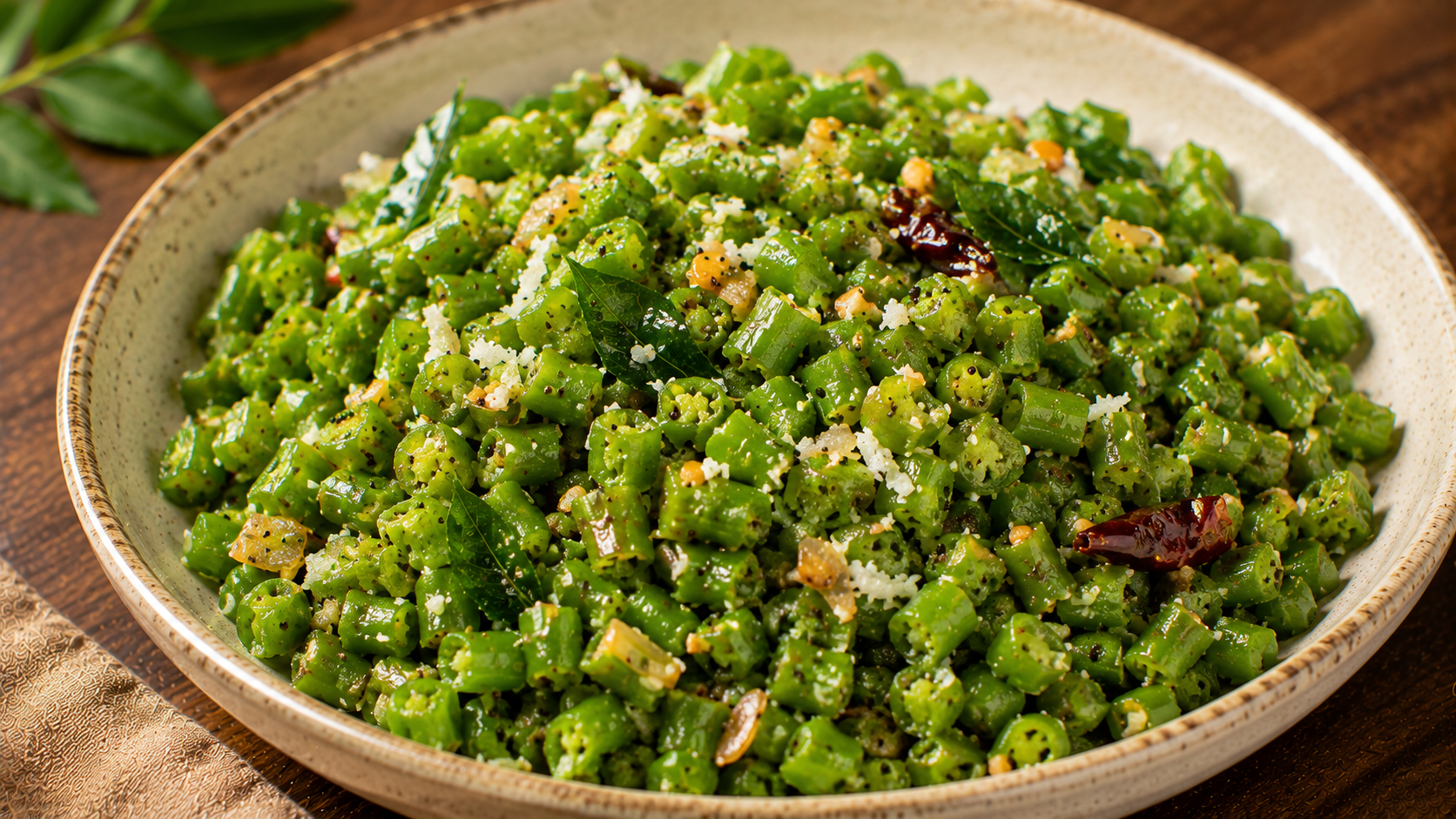
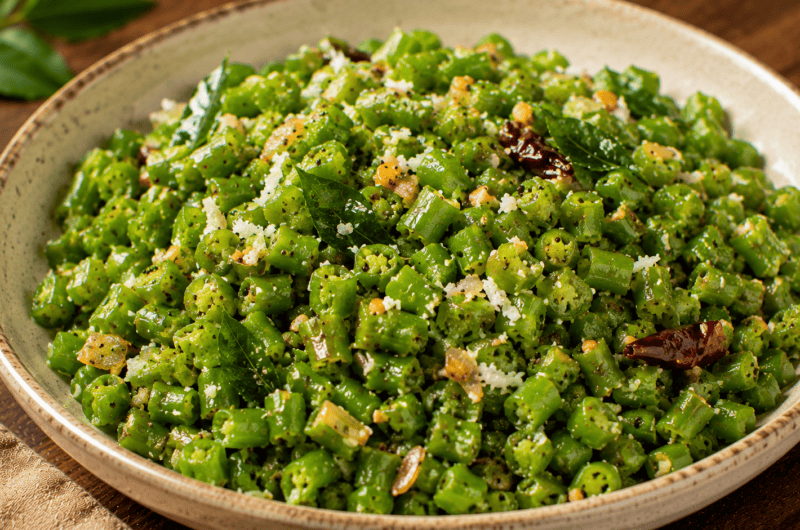
This incredibly fresh, beautifully vibrant, and naturally sweet Beans Poriyal is the ultimate weeknight dinnertime savior for anyone looking to bring the delicate, homestyle flavors of South India right into their own kitchen. Whether you are packing a light lunch for a busy workday or simply searching for healthy vegetarian side dishes to effortlessly elevate your weekly meal prep, this quick-sautéed vegetable marvel hits all the right marks. Packed with tender-crisp green beans, aromatic curry leaves, and a generous dusting of freshly grated coconut, it delivers massive, restaurant-quality flavor while remaining exceptionally budget-friendly, naturally vegan, and remarkably easy to assemble in under 20 minutes.
Origin Beans Poriyal
The term Poriyal hails from the Tamil language, referring broadly to a traditional South Indian culinary technique where chopped vegetables are shallow-fried or sautéed along with a fragrant tempering of spices, and classically finished with fresh, snowy-white grated coconut. Historically, this method was celebrated across Tamil Nadu for its ability to preserve the vibrant color, crunch, and nutritional integrity of fresh daily harvests without drowning them in heavy gravies. Today, recognizing the profound health benefits of green beans—which are exceptionally rich in dietary fiber, vitamin K, and essential antioxidants—modern home cooks celebrate this bright, coconut-laced stir-fry as a highly functional, nutrient-dense everyday staple that perfectly balances clean, plant-based eating with absolute culinary joy.
Why I Love This Recipe
I love how this recipe transforms a simple, everyday vegetable into a genuinely crave-worthy, highly textural side dish with almost zero complicated prep. It completely eliminates the sluggish, heavy feeling that often accompanies heavily oiled or cream-based vegetable sides, relying instead on the natural sweetness of the coconut to balance the earthy spices. It is one of the absolute best quick and easy healthy dinner ideas because the entire dish comes together in a single pan in a matter of minutes. You can serve your Beans Poriyal classically alongside a steaming bowl of rasam or sambar with rice, pair it with simple dal and rotis, or even toss it into a quinoa salad for a brilliantly crunchy, protein-packed vegan lunch.
Tips for the Perfect Crunch
To achieve a bright, tender-crisp bite rather than a watery, mushy vegetable, managing your cutting technique and pan heat is absolutely critical. First, you must chop the green beans uniformly fine—about ¼-inch pieces—which allows them to cook incredibly fast without losing their vibrant green hue. Secondly, you must master the initial tadka (tempering). This is an essential expert spice-tempering technique; allowing the black mustard seeds to fully pop and the urad dal (split black gram) to turn a deep, nutty golden brown in the hot oil before adding your beans creates a deeply aromatic, crunchy foundation that defines a truly authentic Beans Poriyal.
Also Read : Chicken Cilantro Soup
Beans Poriyal
4
servings10
minutes10
minutes110
kcalIngredients
1 lb fresh green beans (French beans), ends trimmed and finely chopped into 1/4-inch pieces
1 tbsp coconut oil (or refined vegetable oil)
1 tsp black mustard seeds
1 tsp urad dal (split black gram without skin)
2 dried red chilies, broken in half
1 g enerous pinch of hing (asafoetida)
1 sprig of fresh curry leaves (about 10-12 leaves)
1 small yellow or red onion, finely chopped (optional, but highly recommended)
2 g reen chilies, slit down the middle (adjust for heat)
1/2 tsp fine sea salt (or to taste)
2 to 3 tbsp water (for steaming)
1/3 cup freshly grated coconut (frozen coconut thawed to room temperature works perfectly)
Directions
- Temper the Spices (Crucial Step): Heat the coconut oil in a wide, heavy-bottomed skillet or kadhai over medium heat. Once the oil is hot and shimmering, add the black mustard seeds. Wait for them to crackle and pop completely.
- Toast the Dal and Aromatics: Immediately add the urad dal and dried red chilies. Sauté for about 15 to 20 seconds, stirring constantly, until the dal turns a beautiful, nutty golden brown (do not let it burn).
- Add the Herbs: Quickly stir in the hing and the fresh curry leaves. Stand back slightly, as the curry leaves will sputter in the hot oil.
- Sauté the Onions: Add the finely chopped onions and slit green chilies. Sauté for 2 to 3 minutes until the onions turn soft and translucent.
- Cook the Beans: Add the finely chopped green beans and the sea salt. Toss aggressively for 1 to 2 minutes so the beans are fully coated in the fragrant, spiced oil.
- Steam to Tender-Crisp: Sprinkle just 2 to 3 tablespoons of water over the beans. Cover the skillet with a tight-fitting lid, lower the heat to medium-low, and let the beans steam for 4 to 5 minutes. Check once halfway through; the beans should be tender but still retain a bright green crunch.
- The Coconut Finish: Remove the lid and let any residual moisture cook off for 30 seconds. Turn off the heat completely. Sprinkle the fresh grated coconut over the pan and gently fold it into the vegetables until perfectly combined.
- Serve: Garnish your fragrant Beans Poriyal with a few extra curry leaves if desired, and serve immediately alongside hot rice and dal!
Notes
- Frozen Coconut Tip: If you are using frozen grated coconut, run it briefly under hot water in a fine-mesh sieve and squeeze out the excess moisture before adding it to the pan.
- Skip the Onions: For a strictly traditional, orthodox preparation (often made during festivals), simply omit the onions. The flavor relies purely on the coconut and the tempered spices.
- Storage: Store leftovers in an airtight container in the refrigerator for up to 3 days. Reheat very gently on the stovetop; avoid microwaving on high power, as it can cause the coconut to release its oils and turn slightly chewy.