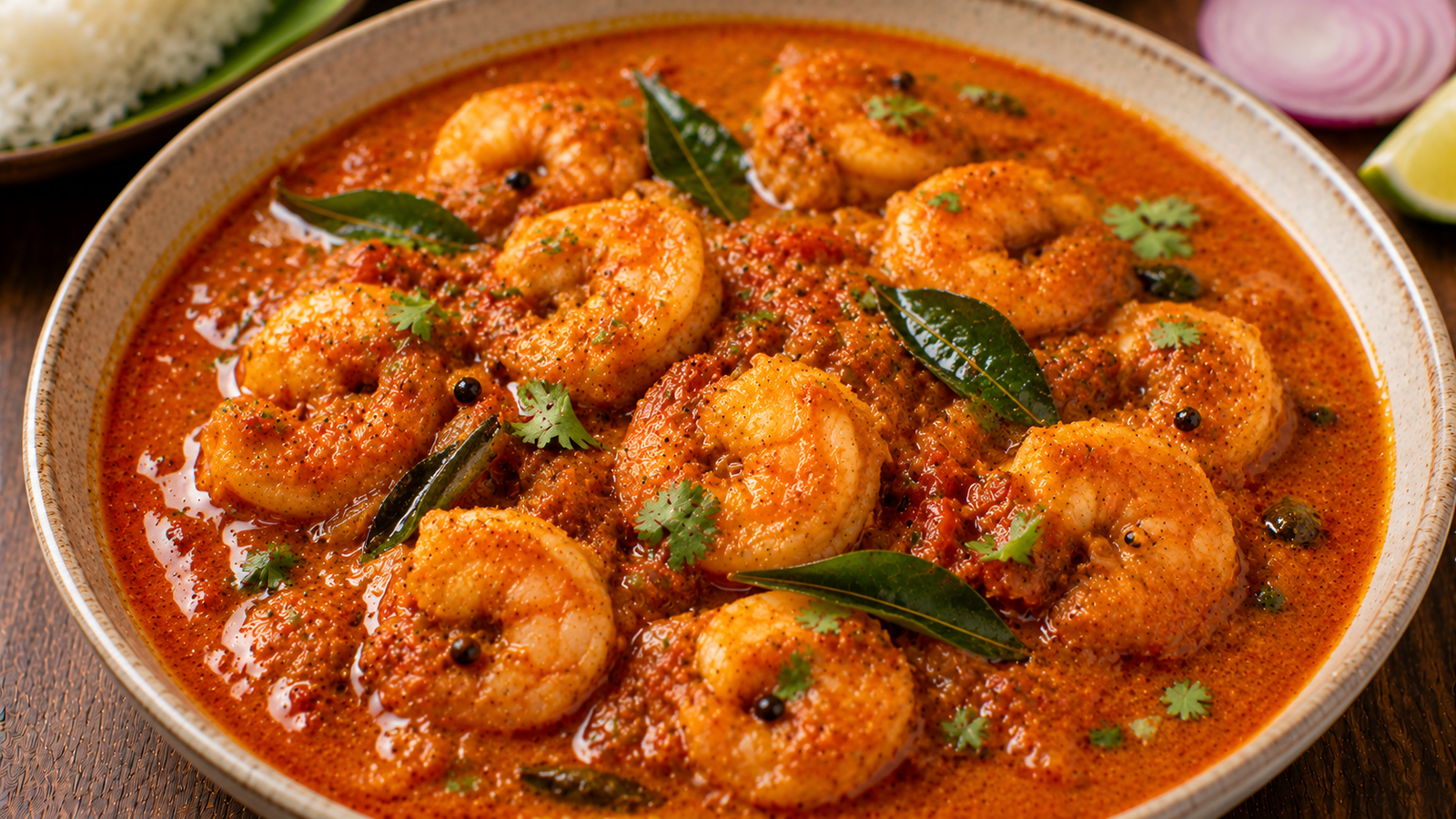
This incredibly vibrant, beautifully creamy, and wonderfully tangy Malabar Shrimp Curry is the ultimate weeknight dinnertime savior for anyone looking to bring the bright, coastal flavors of South India right into their own kitchen. Whether you are hosting a festive seafood dinner, craving a quick but highly aromatic meal, or simply searching for healthy and elegant seafood recipes to effortlessly elevate your curry rotation, this coconut-based marvel hits all the right marks. Packed with plump, juicy shrimp simmered in a luscious broth of coconut milk, fragrant curry leaves, and a sharp hit of tamarind, it delivers massive, restaurant-quality satisfaction while remaining exceptionally budget-friendly, naturally dairy-free, and remarkably easy to assemble in under 30 minutes.
Origin Malabar Shrimp Curry
The culinary history of Malabar Shrimp Curry is deeply rooted in the tropical, spice-rich Malabar coast of Kerala, a southern state in India. This coastal region is globally renowned for its abundant seafood, lush coconut groves, and historical significance as a major hub in the ancient spice trade. Traditional Kerala cooking relies heavily on indigenous ingredients like sharp mustard seeds, earthy fenugreek, fresh coconut, and kudampuli (Malabar tamarind), which gives the curries their signature, mouth-watering sourness. Today, recognizing the profound health benefits of coconut milk and omega-rich seafood, modern home cooks celebrate this vibrant, golden-hued masterpiece as a highly functional, nutrient-dense centerpiece that perfectly balances sweet, creamy indulgence with robust, acidic tanginess.
Why I Love This Recipe
I love how this recipe transforms a simple bag of frozen shrimp and basic pantry spices into a genuinely spectacular, highly texturized centerpiece with practically zero complicated prep. It completely eliminates the sluggish, heavy feeling that often accompanies thick, dairy-heavy northern Indian curries, relying instead on the light, natural sweetness of coconut milk to beautifully carry the spices. It is one of the absolute best quick and comforting dinner ideas because shrimp cooks in mere minutes, meaning the entire dish comes together faster than you can steam a pot of rice. You can serve your Malabar Shrimp Curry classically alongside fluffy basmati rice, pair it with lacy appams (rice pancakes), or soak up the glorious gravy with warm, flaky parathas.
Tips for the Perfect Gravy
To achieve a flawlessly balanced, aromatic sauce and perfectly tender seafood rather than rubbery shrimp and a flat broth, managing your tempering and cooking time is absolutely critical. First, you must take the time to properly “temper” your mustard seeds and fresh curry leaves in hot coconut oil at the very beginning of the recipe. This is an essential expert spice-blooming technique; the hot oil extracts the fat-soluble flavor compounds from the curry leaves, creating an incredibly aromatic base. Furthermore, shrimp cooks shockingly fast. You must build, simmer, and completely finish the rich coconut gravy before you add the shrimp. Once the shrimp hit the hot liquid, they only need 3 to 4 minutes to cook through. Boiling them any longer will result in a tough, chewy texture that ruins the delicate nature of the Malabar Shrimp Curry.
Also Read : Chilli Chicken
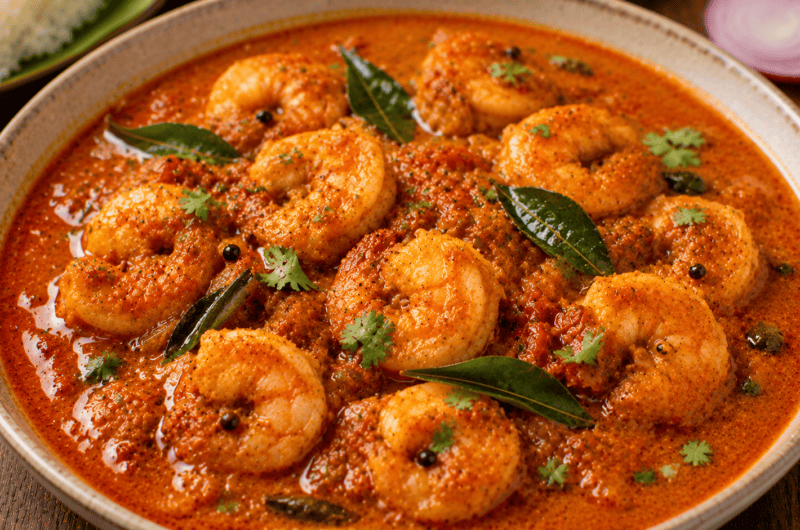
Malabar Shrimp Curry
4
servings15
minutes20
minutes320
kcalIngredients
1 lb (450g) large shrimp (prawns), peeled and deveined (tails on or off)
2 tbsp virgin coconut oil (crucial for authentic flavor)
1 tsp black mustard seeds
1/4 tsp fenugreek seeds
15-20 fresh curry leaves
1 l arge red onion, very finely chopped
1 tbsp ginger-garlic paste
2 fresh green chilies, slit lengthwise
1 medium tomato, finely chopped
The Spice Blend:
1 tsp Kashmiri red chili powder
1 tsp ground coriander
1/2 tsp turmeric powder
1 cup full-fat canned coconut milk
1 tbsp tamarind paste (or 2 pieces of soaked kokum/kudampuli)
1 tsp fine sea salt
1/2 cup warm water
For Garnish: Fresh cilantro (coriander) leaves
Directions
- Temper the Spices: Heat the coconut oil in a large, heavy-bottomed skillet or clay pot over medium heat. Add the mustard seeds and wait for them to pop and splutter. Immediately add the fenugreek seeds and fresh curry leaves (stand back, as the leaves will crackle in the hot oil).
- Sauté the Aromatics: Add the finely chopped onions and slit green chilies to the pan. Sauté for 6 to 8 minutes until the onions are soft and light golden brown. Stir in the ginger-garlic paste and cook for 1 more minute until the raw garlic smell disappears.
- Build the Base: Stir in the chopped tomatoes, Kashmiri chili powder, coriander, turmeric, and salt. Cook for 4 to 5 minutes, mashing the tomatoes with the back of your spoon until they break down completely and the oil begins to separate at the edges of the pan.
- Create the Broth: Pour in the tamarind paste (mixed with a little water) and ½ cup of warm water. Bring the mixture to a gentle simmer for 3 minutes to allow the sharp, tangy flavors to meld.
- Add the Coconut Milk: Lower the heat to a gentle simmer. Pour in the full-fat coconut milk, stirring continuously to integrate it into the spicy tomato base. Do not let the curry boil vigorously once the coconut milk is added, or it may separate. Simmer gently for 5 minutes.
- Cook the Shrimp (Crucial Step): Gently drop the peeled shrimp into the bubbling coconut gravy. Cook for just 3 to 4 minutes, turning them once, until they turn opaque, pink, and curl into a “C” shape. Turn off the heat immediately to prevent overcooking.
- Serve: Garnish your stunning, aromatic Malabar Shrimp Curry with fresh chopped cilantro. Serve immediately while piping hot alongside steamed basmati rice!
Notes
- Tamarind Substitute: If you cannot find tamarind paste or kokum, you can substitute it with 1 tablespoon of fresh lime juice, stirred into the curry right at the very end (off the heat).
- Using Frozen Shrimp: If using frozen shrimp, ensure they are completely thawed and patted very dry with paper towels before adding them to the curry, otherwise they will release too much water and thin out your rich gravy.
- Storage: Store leftovers in an airtight container in the refrigerator for up to 2 days. Reheat very gently on the stovetop over low heat to avoid overcooking the shrimp.