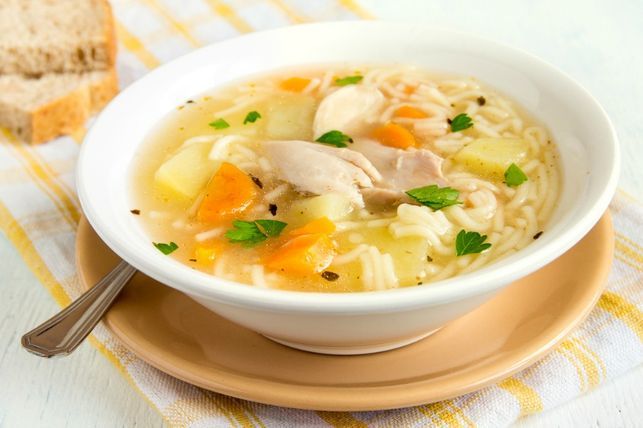
There is something satisfying about making chicken soup from the beginning rather than starting with a carton of broth. A whole chicken, a few simple vegetables and water don’t look particularly impressive in the pot, but given enough time they create a flavorful broth and tender chicken at the same time.
This homemade chicken soup keeps the ingredient list intentionally simple. Carrots, celery and onion provide the vegetable base, while the whole chicken supplies both the meat and much of the flavor of the broth.
The key isn’t adding dozens of ingredients. It’s controlling the simmer, giving the chicken enough time to cook gently and seasoning the finished broth to taste.
Why Use a Whole Chicken for Chicken Soup?
Using a whole chicken gives you more than cooked chicken meat.
As the chicken simmers, the bones, skin and connective tissues contribute flavor and body to the cooking liquid. Instead of cooking chicken separately and adding it to prepared broth, you’re essentially making the broth and cooking the meat in the same pot.
Bone-in thighs and drumsticks can also work, but a whole chicken makes this an especially straightforward one-pot method.
Start With Cold Water
Place the chicken and vegetables in the pot first, then add enough cold water to cover them.
From there, bring everything gradually toward a boil.
Once it reaches that point, reduce the heat. The goal for most of the cooking time isn’t an aggressive rolling boil but a gentle simmer.
This gives the ingredients time to flavor the broth without unnecessarily breaking the vegetables apart.
Why Does Foam Appear on Chicken Soup?
You may notice pale or grayish foam collecting on the surface as the chicken begins cooking.
This is normal.
Use a spoon or small ladle to skim it away, particularly during the early part of cooking. Removing it can help produce a cleaner-looking broth.
You don’t need to obsessively skim every tiny bubble. Remove the obvious accumulation and let the soup continue simmering.
How Do You Know When the Chicken Is Ready?
For this recipe, expect approximately 75–90 minutes of gentle simmering, although the exact time depends on the size of the chicken and the intensity of the simmer.
The chicken should be completely cooked and the meat tender.
Carefully lift it from the broth and allow it to cool enough to handle. Then remove the skin and bones and shred or chop the meat.
Don’t try to pull apart a steaming-hot chicken. A short cooling period makes the job considerably easier.
Should You Strain Homemade Chicken Soup?
It depends on the result you want.
Straining the broth after removing the chicken and vegetables gives you a cleaner base and catches small fragments that may have separated during the long simmer.
After straining, return the broth to the pot along with the chicken and the vegetables you want to keep.
The carrots and celery can be chopped into smaller pieces. The onion may be extremely soft after a long cooking time, so you can either return it to the soup or discard it depending on its texture.
Season Near the End
One advantage of waiting to make the final seasoning adjustment is that the broth changes as it cooks.
Taste it once the chicken and vegetables have been returned to the pot.
Add salt and black pepper gradually.
The optional chicken bouillon is best treated as exactly that: optional. Taste the broth first. If the chicken has already produced plenty of savory flavor, you may not need it.
How to Get More Flavor From a Simple Chicken Soup
Don’t assume that more ingredients automatically mean better soup.
A few small details matter considerably:
Keep the chicken bone-in while making the broth. Maintain a gentle simmer rather than violently boiling the pot. Give the broth enough cooking time. And most importantly, taste it before serving.
If the soup seems bland, salt may be the missing component rather than another herb or seasoning.
Add a little, stir, taste again and adjust.
Adding More Vegetables
The basic carrot-celery-onion combination is deliberately simple, but you can add other vegetables.
The important thing is when you add them.
Potatoes need time to become tender and should therefore go in considerably earlier than something like frozen peas or corn.
Tender vegetables added too early can become mushy during a long simmer.
If you’re experimenting, think about the normal cooking time of each vegetable instead of simply putting everything into the pot at the beginning.
Storing Leftover Chicken Soup
Allow leftover soup to cool before transferring it to covered containers and refrigerating it promptly.
For longer storage, chicken soup also freezes well. Portioning it before freezing can be useful because you can thaw only as much as you need.
When reheating, bring the portion you’re going to eat back to a thorough, steaming-hot temperature rather than repeatedly reheating the entire batch.
Frequently Asked Questions
Can I use chicken pieces instead of a whole chicken?
Yes. Bone-in thighs and drumsticks are particularly suitable because the bones contribute flavor to the broth. Cooking time will depend on the size and type of pieces you use.
Why is my chicken broth cloudy?
A vigorous boil can make broth cloudier. Maintain a gentle simmer and skim obvious foam from the surface during the early stages of cooking. Cloudiness doesn’t automatically mean the soup has failed, however.
Why does my chicken soup taste bland?
Taste for salt first. A broth containing good chicken and vegetables can still taste flat when it is under-seasoned. Adjust gradually so you don’t oversalt it.
Should I discard the vegetables used to make the broth?
Not necessarily. The carrots and celery can be chopped and returned to the finished soup if their texture is still pleasant. Very soft vegetables can be discarded and replaced if you prefer firmer pieces.
Can I add noodles?
Yes. Cook them in the finished broth until tender, or cook them separately and add them to individual portions. Cooking them separately is useful if you expect leftovers because noodles continue absorbing broth during storage.
Can I make the soup ahead of time?
Yes. In fact, chicken soup is well suited to advance preparation. Store it refrigerated and reheat only the amount you intend to serve.
Also Read: Chicken Malai Kebab Recipe

Best Homemade Chicken Soup
8
servings25
minutes1
hour30
minutes1
hour55
minutesThis homemade chicken soup starts with a whole chicken slowly simmered with carrots, celery and onion to create its own flavorful broth. The cooked chicken and vegetables are then returned to the pot for a simple, comforting soup made from basic ingredients.
Ingredients
1 whole chicken, about 3 lb (1.4 kg)
4 medium carrots, peeled and halved
4 stalks celery, halved
1 Large onion, peeled and halved
As needed cold water, enough to cover the chicken
1/2 teaspoon black pepper, plus more to taste
1 teaspoon chicken bouillon granules, optional
Directions
- Start the broth
Place the chicken, carrots, celery and onion in a large soup pot. Add enough cold water to cover the chicken. Bring to a gentle boil, then immediately reduce the heat to maintain a low simmer. - Simmer gently
Simmer uncovered for about 75–90 minutes, or until the chicken is fully cooked and the meat is tender. Skim away any foam that collects on the surface during the first part of cooking. - Remove the chicken
Carefully transfer the chicken to a large plate or cutting board and allow it to cool until easy to handle. Remove and discard the skin and bones, then shred or chop the meat into bite-size pieces. - Strain the broth
Remove the vegetables from the broth. Strain the broth if you want a cleaner soup, then return it to the pot. Chop the cooked carrots and celery into smaller pieces. Discard the onion if it has become too soft, or chop and return it if you prefer. - Finish the soup
Return the chicken and chopped vegetables to the broth. Bring the soup back to a gentle simmer and cook for another 5–10 minutes, until everything is heated through. - Season and serve
Taste the broth and season with salt and black pepper. Add the optional chicken bouillon only if the broth needs a stronger savory flavor. Serve hot.
Notes
- Use bone-in chicken: A whole chicken contributes both meat and flavor to the broth. Bone-in chicken thighs and drumsticks can also be used, although the cooking time may change.
- Keep the simmer gentle: A hard rolling boil can make the broth cloudier and can break down the vegetables too quickly. Once the soup reaches a boil, reduce the heat.
- Add extra vegetables at the right time: Potatoes need enough time to become tender, while peas or corn can be added much closer to the end of cooking. Add extra vegetables according to how long they need to cook.