
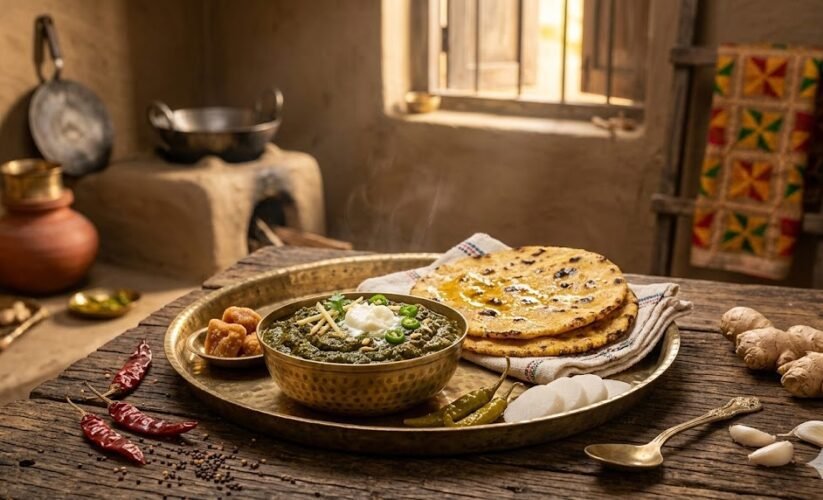
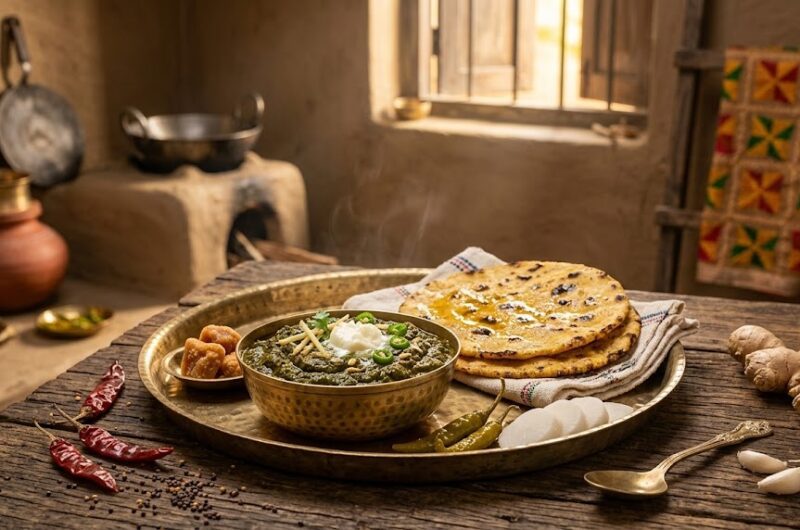
Sarson ka Saag is a traditional North Indian winter delicacy made primarily with mustard greens and slow-cooked with aromatic spices. This comforting dish is a staple in Punjabi households and is best enjoyed with makki di roti and white butter. Sarson ka saag recipe is rich, earthy, and deeply flavorful.
Origin of Sarson ka Saag
Sarson ka Saag originates from Punjab, a region known for hearty and rustic cuisine. During winter, fresh mustard greens are harvested and cooked into this nourishing dish. Over time, the sarson ka saag recipe became a symbol of Punjabi tradition and festive meals.
Why It’s Loved
This sarson ka saag recipe is loved for its authentic earthy flavor and creamy texture. Slow cooking enhances the taste, while a final tempering of ghee and garlic adds richness. It’s healthy, comforting, and perfect for winter meals.
Also Read : Quesadilla: A Classic Mexican Delight
Sarson ka Saag Recipe (Authentic Punjabi Style)
4
servings20
minutes50
minutes280
kcalIngredients
3 cups mustard greens (sarson), chopped
1 cup spinach (palak), chopped
1/2 cup bathua (optional)
1 onion, chopped
2 tomatoes, chopped
1 inch ginger
3 –4 garlic cloves
1 g reen chili
2 tbsp maize flour (makki ka atta)
2 tbsp ghee
1/2 tsp red chili powder
1/2 tsp turmeric
Salt to taste
Directions
- Wash and roughly chop mustard greens, spinach, and bathua.
- In a pressure cooker or pot, add greens, ginger, garlic, green chili, salt, and a little water. Cook until soft (20–25 minutes).
- Mash or blend lightly to keep a coarse texture.
- Add maize flour and cook for 10–15 minutes on low heat, stirring occasionally.
- In a separate pan, heat ghee and sauté onions until golden.
- Add tomatoes, turmeric, and red chili powder. Cook until soft.
- Mix this tempering into the saag and simmer for 5–10 minutes.
- Serve hot with makki di roti and a dollop of white butter.
Notes
- Storage: Refrigerate up to 3 days.
- Serving Tip: Best enjoyed with makki di roti and jaggery on the side.
- Authentic Tip: Slow cooking enhances the traditional flavor.


)