
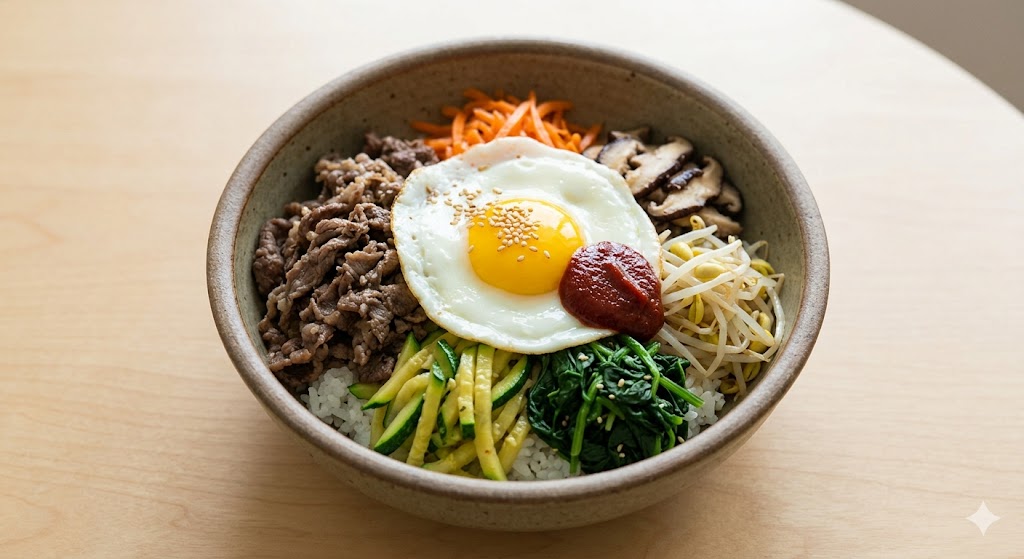
Bibimbap (Korean Mixed Rice with Meat and Assorted Vegetables) is a traditional Korean dish made with steamed rice topped with sautéed vegetables, seasoned meat, fried egg, and spicy gochujang sauce. This bibimbap recipe (Korean mixed rice with meat and assorted vegetables) offers a colorful and nutritious meal with a perfect balance of flavors and textures.
Origin of Bibimbap
Bibimbap originated in Korea and has been enjoyed for centuries as a wholesome rice dish. The name “bibimbap” literally means “mixed rice,” referring to the practice of mixing rice with vegetables, meat, and sauce before eating. It is traditionally served in a bowl or a hot stone pot called dolsot.
Why It’s Loved
Bibimbap (Korean mixed rice with meat and assorted vegetables) is loved for its vibrant presentation, balanced nutrition, and customizable ingredients. The mix of fresh vegetables, savory meat, and spicy sauce creates a delicious and satisfying meal.
Also Read: Buckwheat Soba Tiger Salad
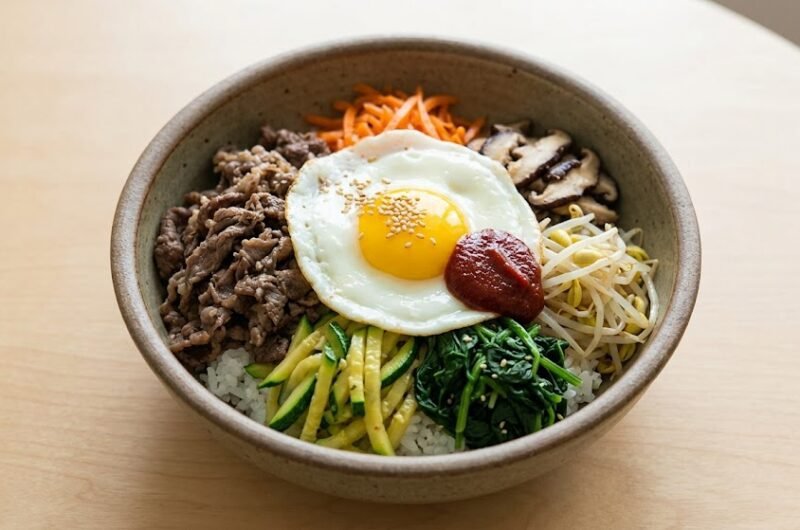
Bibimbap (Korean Mixed Rice with Meat and Assorted Vegetables)
2
servings20
minutes15
minutes520
kcalIngredients
2 cups cooked white rice
200 g beef (thinly sliced)
1 c arrot, julienned
1 zucchini, sliced
1 cup spinach
1 cup bean sprouts
2 eggs
2 tbsp sesame oil
2 tbsp soy sauce
1 tbsp gochujang (Korean chili paste)
1 tsp garlic, minced
1 tsp sesame seeds
Salt and pepper to taste
Directions
- Cook white rice and set aside.
- Season sliced beef with soy sauce, garlic, salt, and pepper, then sauté until cooked.
- Lightly sauté carrot and zucchini separately with a little sesame oil.
- Blanch spinach and bean sprouts briefly and season lightly with salt.
- Fry eggs sunny-side up.
- Place cooked rice in a serving bowl.
- Arrange beef and vegetables neatly on top of the rice.
- Add the fried egg in the center.
- Drizzle sesame oil and add gochujang.
- Sprinkle sesame seeds and mix everything before eating.
Notes
- Serving Suggestion: Serve with kimchi or Korean pickled vegetables on the side.
- Tip: Use a hot stone bowl (dolsot) to create crispy rice at the bottom.
- Storage: Best enjoyed fresh; leftovers can be stored in the refrigerator for up to 1 day.

)