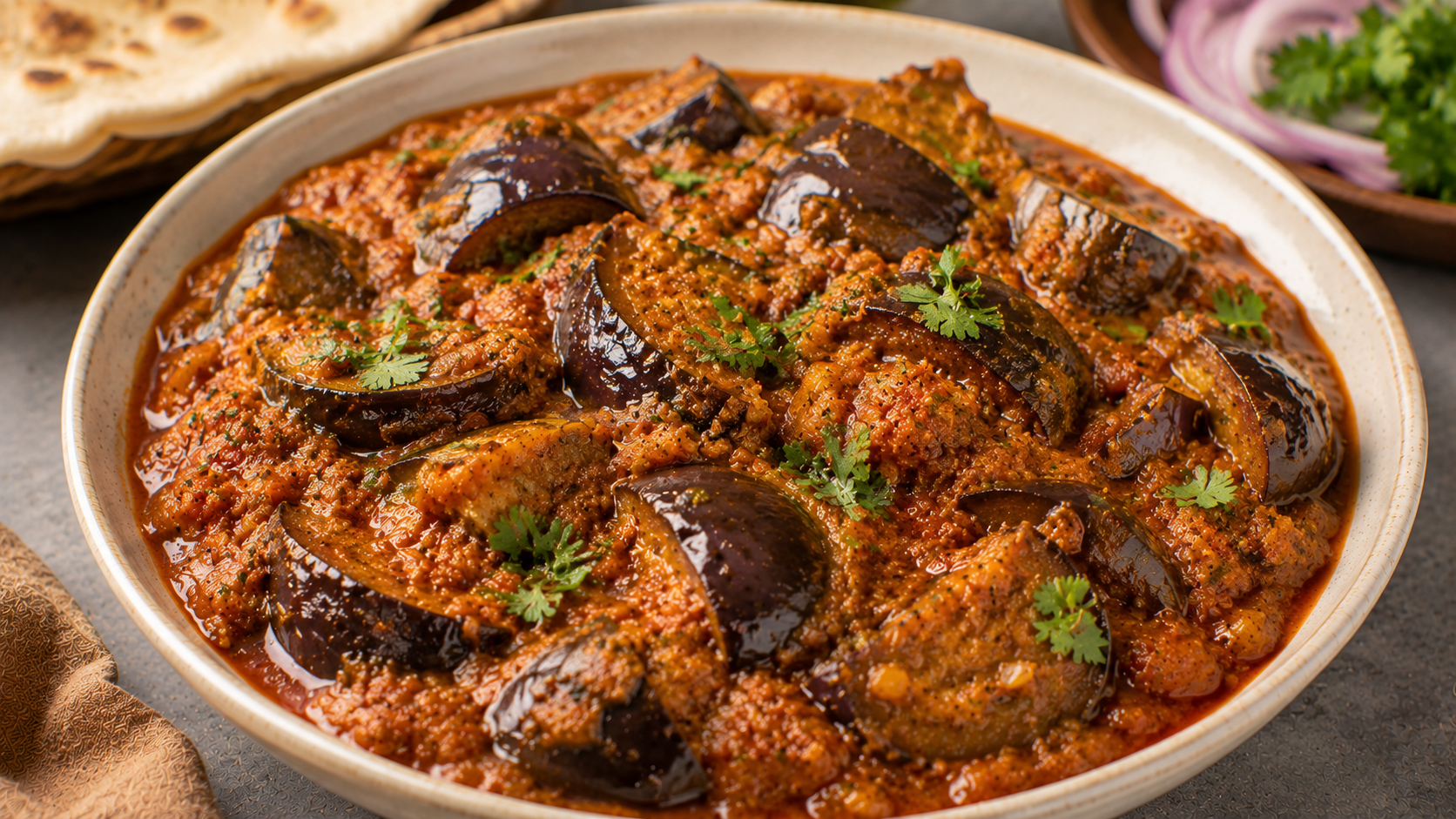
This incredibly rich, deeply aromatic, and melt-in-your-mouth Baingan Masala is the ultimate weeknight dinnertime savior for anyone looking to bring the robust, earthy flavors of a traditional Indian dhaba right into their own kitchen. Whether you are hosting a comforting weekend family dinner or simply searching for healthy vegetarian dinner recipes to elevate your meatless rotation, this classic curry hits all the right marks. Packed with tender baby eggplants slowly simmered in a luscious, spiced tomato and onion gravy, it delivers massive, restaurant-quality flavor while remaining exceptionally budget-friendly and easy to assemble in under 40 minutes.
Origin Baingan Masala
The eggplant (or baingan) is native to the Indian subcontinent, where it has been cultivated for over 4,000 years and is affectionately known as the “King of Vegetables.” Throughout history, regional Indian cuisines have developed countless ways to prepare this incredibly versatile nightshade, from the smoky, fire-roasted Baingan Bharta of the North to the peanut-and-sesame-rich Bagara Baingan of Hyderabad. Baingan Masala is a beloved everyday staple across North India and Punjab, celebrated for its robust, deeply spiced tomato-onion base (bhuna masala). Recognizing the profound health benefits of eggplants—which are exceptionally rich in dietary fiber, potassium, and powerful antioxidants like nasunin—modern home cooks celebrate this hearty curry as a highly functional, deeply nourishing centerpiece that effortlessly balances health and indulgence.
Why I Love This Recipe
I love how this recipe transforms a famously misunderstood vegetable into a genuinely crave-worthy, highly addictive main course. It completely eliminates the spongy, watery texture that often plagues poorly cooked eggplant, rendering it incredibly creamy and rich. It is one of the absolute best quick and easy healthy dinner ideas because the fragrant, bubbling gravy does all the heavy lifting. You can serve your Baingan Masala classically alongside piping hot chapatis or garlic naan to scoop up the thick sauce, pair it with steaming basmati rice, or even repurpose the leftover masala gravy the next day with chickpeas or boiled eggs.
Tips for the Perfect Texture
To achieve a beautifully tender, creamy eggplant rather than a bitter or mushy mess, managing your prep and pan-frying is absolutely critical. First, you must use small, purple baby eggplants, slitting them into a cross (+) from the base but keeping the stem intact so they hold their shape. This is an essential expert vegetable cooking technique; slitting them allows you to check for pests and ensures the robust spices penetrate all the way to the center. Furthermore, briefly pan-frying the eggplants in a little oil before adding them to the simmering gravy seals their exterior, ensuring your Baingan Masala features perfectly intact, jewel-like eggplants that yield beautifully to a fork.
Also Read : Aperol Spritz
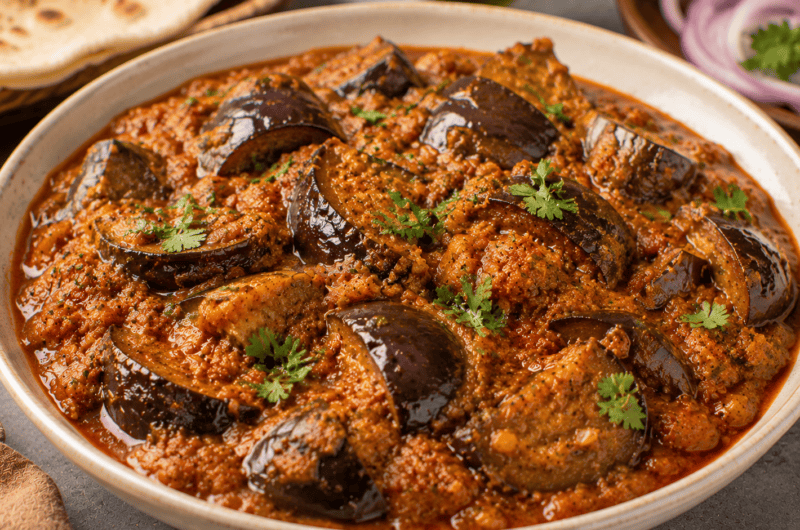
Baingan Masala
4
servings15
minutes25
minutes210
kcalIngredients
10-12 small purple baby eggplants (baingan)
3 tbsp mustard oil or vegetable oil (divided use)
1 tsp cumin seeds
1 medium red onion, very finely diced
1 tbsp ginger-garlic paste
2 medium tomatoes, pureed or very finely chopped
1 g reen chili, slit lengthwise
For the Spice Blend:
1 tbsp coriander powder
1/2 tsp cumin powder
1/2 tsp turmeric powder
1 tsp Kashmiri red chili powder (for vibrant color without excessive heat)
1/2 tsp garam masala
1 tsp fine sea salt
1 tsp dry mango powder (amchur) (optional, for tanginess)
1 cup water (or vegetable broth)
For Garnish: 2 tbsp fresh cilantro (coriander) leaves, finely chopped
Directions
- Prep the Eggplants (Crucial Step): Wash the baby eggplants thoroughly and pat them completely dry with a kitchen towel. Keep the green stems intact. Make two deep slits perpendicular to each other starting from the base, cutting about 3/4 of the way up toward the stem. Check the insides to ensure they are clean.
- Pan-Fry the Eggplants: Heat 2 tablespoons of oil in a large, heavy-bottomed skillet or kadhai over medium heat. Add the slit eggplants and fry them for 5 to 7 minutes, turning occasionally, until the skins begin to blister and they are about 50% cooked. Remove them to a plate and set aside.
- Build the Masala Base: In the same skillet, add the remaining 1 tablespoon of oil. Toss in the cumin seeds and let them sizzle for a few seconds. Add the finely diced onions and sauté for 6 to 8 minutes until they turn a deep golden brown.
- Aromatize: Stir in the ginger-garlic paste and the slit green chili. Cook for 1 to 2 minutes until the raw smell of the garlic disappears.
- Add Tomatoes and Spices: Pour in the tomato puree. Immediately add the coriander powder, cumin powder, turmeric, Kashmiri chili powder, and salt. Cook this mixture over medium heat, stirring frequently, until the oil begins to separate and leave the sides of the pan (about 5 to 7 minutes).
- Simmer the Curry: Stir in the garam masala and amchur powder. Pour in the 1 cup of water and mix well to create a thick gravy. Bring the gravy to a gentle simmer.
- Finish Cooking: Gently place the partially fried baby eggplants back into the bubbling gravy. Cover the pan with a tight-fitting lid, reduce the heat to low, and let the Baingan Masala simmer for 10 to 12 minutes, or until the eggplants are completely tender and have absorbed the flavors of the sauce.
- Garnish and Serve: Turn off the heat. Garnish generously with freshly chopped cilantro. Serve hot with roti, paratha, or steamed rice!
Notes
- Peanut & Coconut Variation: For a richer, creamier gravy inspired by South Indian flavors, dry roast 2 tablespoons of peanuts, 1 tablespoon of sesame seeds, and 2 tablespoons of desiccated coconut, grind them to a powder, and add this to the masala base in Step 5.
- Taming the Heat: Kashmiri chili powder is mild and mostly used for color. If you prefer a spicier curry, add ½ teaspoon of standard hot red chili powder along with the other spices.
- Storage: Store leftovers in an airtight container in the refrigerator for up to 4 days. Like most Indian curries, the flavors actually deepen and improve by the second day!