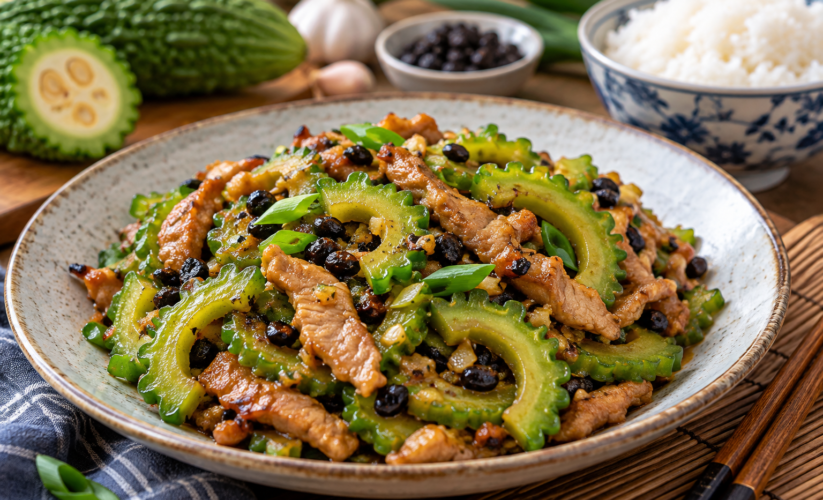
Bitter melon stir fry with pork is all about contrast. The bitter melon is crisp, fresh and unmistakably bitter, while thin slices of pork bring richness and savory flavor to the dish. Add garlic, ginger and a simple stir-fry sauce, and that bitterness becomes part of the appeal rather than something you need to hide.
If you are cooking bitter melon for the first time, preparation makes a surprisingly big difference. Removing the seeds and thoroughly scraping away the white pith helps tame some of its sharpest bitterness. A short blanch in salted water can mellow it further while allowing the slices to remain pleasantly crisp.
This is also a recipe where speed matters. Once the ingredients are prepared, the actual stir-frying should happen quickly over fairly high heat. That keeps the pork tender and prevents the bitter melon from turning soft and watery.
Why This Bitter Melon Stir Fry With Pork Works?
Bitter melon needs strong partners, and pork is particularly well suited to the job. Its richness balances the vegetable’s assertive flavor, while soy sauce, garlic and ginger add savory depth without trying to disguise what makes bitter melon distinctive.
There are three details that make the biggest difference:
- Remove the white pith carefully. It is one of the most bitter parts of the melon.
- Blanch briefly, not endlessly. The goal is to soften the bitterness slightly, not cook the melon until it becomes limp.
- Slice the pork thinly. Thin pieces cook quickly, which is exactly what you want in a stir-fry.
The result should still taste like bitter melon. This recipe is not designed to eliminate its bitterness completely. Instead, it balances that flavor with tender pork and savory seasonings while preserving some of the melon’s characteristic crunch.
How to Prepare Bitter Melon for Stir-Frying
Cut the bitter melon in half lengthwise and scoop out the seeds with a spoon. Scrape the pale pith from the cavity as thoroughly as you reasonably can, then cut the melon into thin half-moon slices.
If you already enjoy the characteristic bitterness of bitter melon, you can stir-fry it after slicing. For a milder result, blanch the slices briefly in salted boiling water, drain them thoroughly, and then proceed with the stir-fry.
Don’t overdo this step. Bitter melon is supposed to be bitter. The aim is to make that bitterness pleasant and balanced rather than remove the defining flavor of the vegetable altogether..
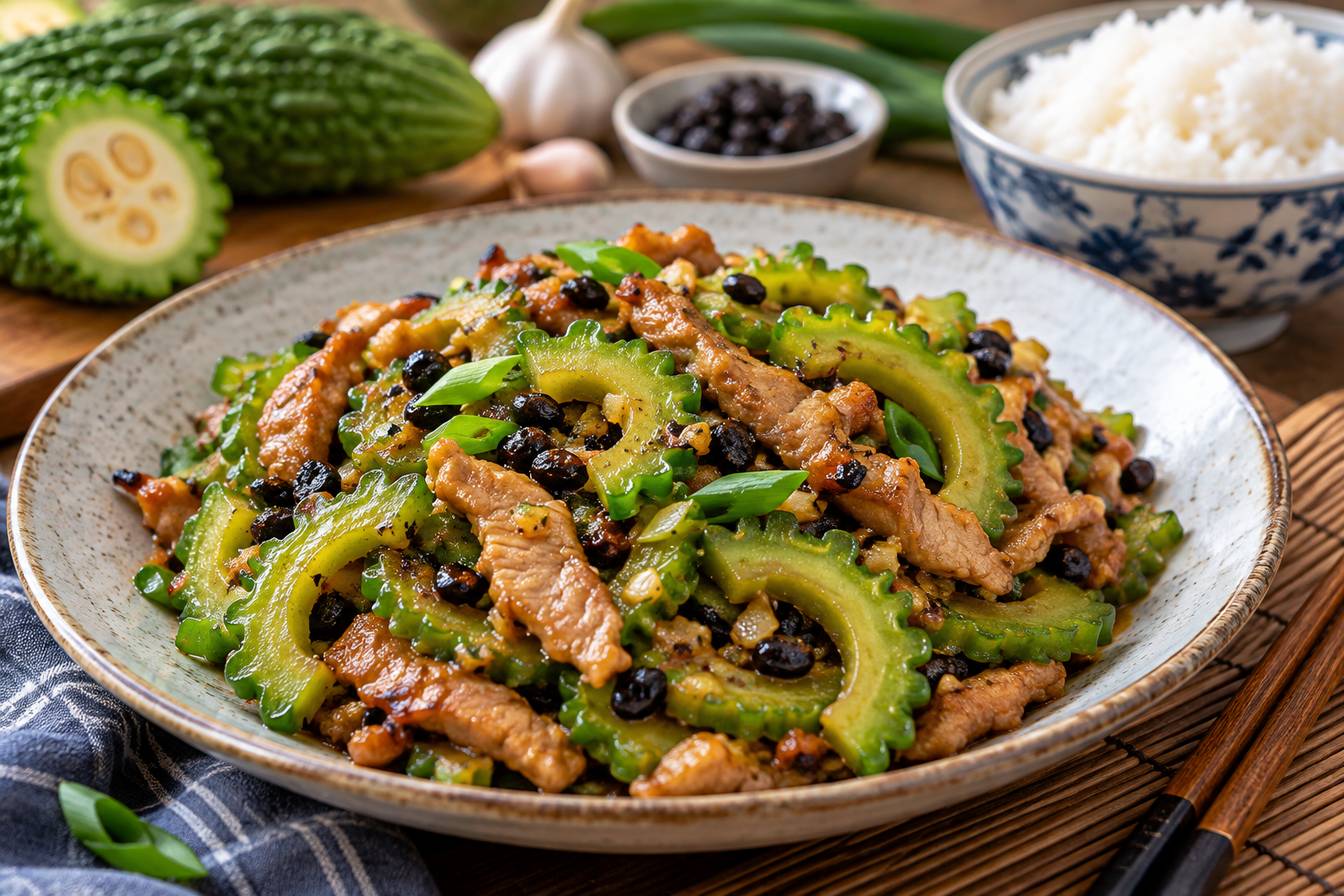
Bitter Melon Stir Fry With Pork
3
servings20
minutes10
minutes30
minutesA savory Chinese-style stir-fry made with tender slices of pork, crisp-tender bitter melon, garlic, and fermented black beans. A quick blanch mellows the melon’s bitterness while the rich, savory sauce balances its distinctive flavor. Serve it hot with steamed rice for a satisfying meal.
Ingredients
1 pound bitter melon
1/2 pound lean pork, thinly sliced
1 1/2 teaspoons teaspoons light soy sauce
2 teaspoons teaspoons Shaoxing rice wine or dry sherry
1 pinch freshly ground white or black pepper
3 1/4 teaspoons teaspoons cornstarch, divided
1/2 cup chicken broth
1 tablespoon Shaoxing rice wine or dry sherry
2 teaspoons granulated sugar
1 tablespoon Chinese fermented black beans, rinsed and lightly mashed
2 teaspoons minced garlic
2 tablespoons neutral vegetable oil, divided, plus more if needed
1/4 teaspoon sesame oil
1 tablespoon water
Salt and pepper, to taste
Directions
- Prepare the bitter melon:
Trim the ends from the bitter melon and cut it in half lengthwise. Scoop out the seeds and scrape away as much of the white pith as possible. Slice the melon diagonally into pieces about 1/4 inch thick. - Blanch the bitter melon:
Bring a pot of water to a boil. Add the sliced bitter melon and blanch for 2 minutes, just until it begins to soften. Drain thoroughly and set aside. For a firmer, more bitter result, shorten the blanching time. - Marinate the pork:
Slice the pork thinly across the grain. Place it in a bowl with the light soy sauce, 2 teaspoons Shaoxing wine or sherry, pepper, and 2 teaspoons cornstarch. Mix well and let it rest for about 10 minutes while you prepare the sauce. - Prepare the sauce:
In a small bowl, combine the chicken broth, 1 tablespoon Shaoxing wine or sherry, and sugar. In a second small bowl, stir the remaining 1 1/4 teaspoons cornstarch with 1 tablespoon water until smooth. Rinse the fermented black beans briefly, drain, and lightly mash them. - Cook the pork:
Heat 1 tablespoon vegetable oil in a wok or large skillet over medium-high heat. Add the fermented black beans and garlic and stir-fry for about 20 seconds, just until fragrant. Add the pork and stir-fry for 2 to 3 minutes, until lightly browned and almost cooked through. Transfer the pork to a plate. - Stir-fry the bitter melon:
Add another 1 to 2 teaspoons oil to the wok if needed. Add the drained bitter melon and stir-fry for about 1 minute. Pour in the chicken broth mixture, return the pork to the wok, and toss everything together. Cover and cook for about 2 minutes. - Finish the sauce:
Stir the cornstarch slurry again and pour it into the center of the wok while stirring. Cook briefly until the sauce becomes glossy and lightly coats the pork and bitter melon. Stir in the sesame oil. Taste and add salt or pepper only if needed, then serve immediately with steamed rice.
Notes
- There are a couple of varieties of bitter melon. The Chinese variety is green and the Taiwanese variety is white and tends to be softer in texture and more bitter.
- The skin is edible so there’s no need to peel before cooking.
Ingredient Notes
Bitter melon
Bitter melon, also called bitter gourd, has a flavor unlike most vegetables. Its bitterness is intentional, so a good bitter melon dish should not try to remove it completely.
Look for firm, fresh melons without large soft or discolored areas. Cutting the melon lengthwise makes it easy to scoop out the seeds and scrape away the pale pith. Removing the pith carefully and briefly blanching the slices will give you a noticeably milder result.
If you already enjoy bitter melon, you can reduce the blanching time to preserve more of its characteristic flavor and firmer texture.
Pork
Lean pork works particularly well because it cooks quickly and provides enough richness to balance the bitter melon. Slice it thinly across the grain. This is more important than it may sound: thick pieces need longer cooking and can easily become tough before the rest of the stir-fry is ready.
Partially chilling the pork for 15–20 minutes can make thin, even slicing easier.
Fermented black beans
Chinese fermented black beans add much of the deep, savory character to this dish. They are intensely salty, so rinse them briefly before using and avoid adding extra salt until you have tasted the finished sauce.
Fermented black beans are not the same as ordinary canned black beans. If you cannot find them, black bean sauce can be used as a convenient alternative, but start with a small amount because prepared sauces vary considerably in saltiness and concentration.
Shaoxing wine
Shaoxing rice wine adds depth to both the pork marinade and the sauce. Dry sherry is a practical substitute if Shaoxing wine is unavailable.
How to Control the Bitterness
There is no single “correct” level of bitterness. Someone who grew up eating bitter melon may want considerably more of it than someone trying the vegetable for the first time.
For a milder version, remove the white pith thoroughly and blanch the sliced melon for about 2 minutes before stir-frying.
For a stronger bitter melon flavor, blanch it only briefly or skip the blanching step altogether. If you do skip it, give the melon a little more time in the wok.
The important thing is not to boil it until completely soft. You want the finished slices to retain some texture.
Common Mistakes to Avoid
Overcooking the pork.
The pork is cooked in two stages, so it does not need to be completely done during the first stir-fry. Remove it once it is nearly cooked and finish it when it returns to the wok.
Leaving too much pith in the bitter melon.
The pale interior contributes additional bitterness. Scraping it out carefully gives you much more control over the final flavor.
Over-blanching the melon.
Two minutes is plenty for a milder version. Cooking it for too long at this stage can leave you with soft bitter melon after the final stir-fry.
Adding salt too early.
Soy sauce and fermented black beans already contribute plenty of saltiness. Taste the completed sauce before deciding whether it needs more.
Forgetting to stir the cornstarch slurry again.
Cornstarch settles quickly. Give the mixture another stir immediately before adding it to the wok or you may leave much of the starch at the bottom of the bowl.
Variations and Substitutions
If pork is not your preference, thinly sliced chicken can work with the same basic technique. Cooking time may need to be adjusted depending on the thickness of the slices.
For more heat, add sliced fresh chili or a small amount of chili oil. Add chili gradually so it complements rather than overwhelms the bitter melon and fermented black beans.
You can also increase the garlic if you prefer a stronger aromatic flavor.
If using prepared black bean sauce instead of fermented black beans, reduce other salty ingredients as necessary and taste before seasoning.
What to Serve With Bitter Melon Stir Fry
Steamed white rice is the simplest choice and works particularly well because it balances the concentrated savory sauce and bitterness of the melon.
Brown rice can also work, although its stronger flavor makes the overall dish more assertive. For a larger meal, serve the stir-fry alongside a mild vegetable dish or a simple soup rather than another strongly seasoned main course.
Storage and Reheating
Store leftovers in a covered container in the refrigerator and use them within 3–4 days.
Reheat the stir-fry briefly in a skillet or wok over medium heat until thoroughly hot. Add a tablespoon or two of water if the sauce has become too thick in the refrigerator.
A microwave also works, but reheating in a pan gives you better control over the texture of the bitter melon.
Freezing is not ideal. The dish can technically be frozen, but bitter melon will lose much of its crisp texture after thawing.
Frequently Asked Questions
Is bitter melon supposed to taste bitter?
Yes. Bitterness is one of the defining characteristics of bitter melon. Preparation can make the flavor milder, but the goal is not necessarily to eliminate it.
Do I have to blanch bitter melon before stir-frying it?
No. Blanching is useful when you want a milder flavor and slightly softer texture. If you already enjoy bitter melon, you can shorten the blanching time or skip it.
What are Chinese fermented black beans?
They are salted and fermented black soybeans used as a seasoning in Chinese cooking. They have an intense salty, savory flavor, so a relatively small amount can season an entire stir-fry.
Can I make this recipe without fermented black beans?
Yes, although the flavor will change. Prepared Chinese black bean sauce is the easiest substitute. Because its concentration and salt content vary by brand, add it gradually and adjust the other seasonings accordingly.
Why is my pork tough?
The most common causes are slices that are too thick or cooking the pork for too long. Slice across the grain, keep the pieces thin, and remember that the pork returns to the wok for a second round of cooking.