
Grilled salmon is one of those meals that can look impressive while requiring surprisingly little work. You don’t need a complicated marinade or a long list of ingredients to get great results. Good salmon, a simple seasoning blend, a hot grill and a little attention to timing are enough.
The challenge isn’t really flavoring the fish. It’s keeping the salmon juicy while developing those lightly charred edges and grill marks—and getting it off the grill without leaving half of your dinner stuck to the grates.
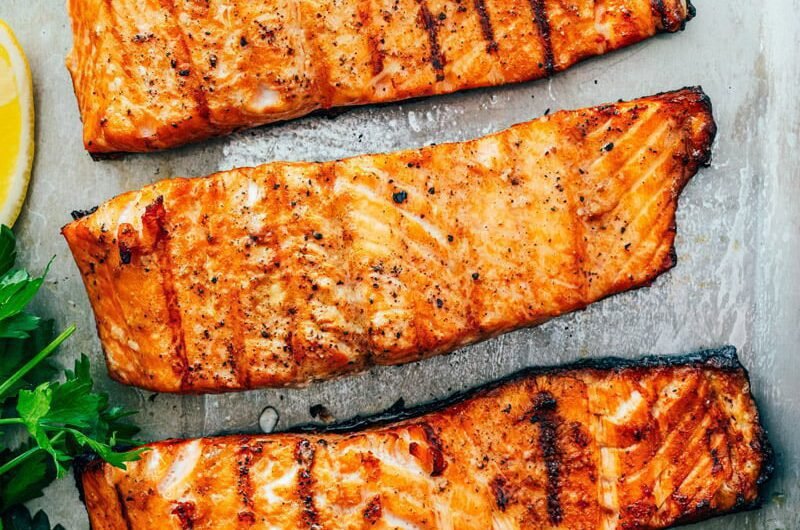
This easy grilled salmon recipe keeps things simple. The salmon is seasoned with smoked paprika, garlic, onion and a touch of cumin, then grilled quickly and finished with fresh lemon.
Why Salmon Works So Well on the Grill
Salmon is naturally well suited to grilling because it’s a relatively rich, oily fish.
That extra fat gives you a little more room for error than you would have with a very lean fish. It also works particularly well with the smoky flavor produced by grilling.
The outside can develop color while the center remains moist and tender.
That doesn’t mean salmon can’t be overcooked—it definitely can. But once you learn to judge the thickness of the fillet and stop treating cooking time as an exact number, grilled salmon becomes remarkably straightforward.
Skin-On or Skinless Salmon?
For grilling, skin-on salmon is particularly convenient.
The skin creates a protective layer between the delicate flesh and the hot grill grates. Starting skin-side down also allows the fish to cook for most of its grilling time without disturbing it.
This matters because salmon becomes increasingly delicate as it cooks.
If your fillets are skinless, you can still grill them. Just pay extra attention to cleaning and oiling the grates, and handle the fish gently when turning it.
How to Keep Salmon From Sticking to the Grill
This is probably the most common frustration with grilled fish.
Three things make a big difference.
First, start with clean grill grates. Old burned-on food makes sticking much more likely.
Second, lightly oil the grates and brush the salmon itself with oil.
Third—and this is the part that’s easy to get wrong—don’t keep trying to move the salmon.
Food often sticks strongly when it first hits a hot grill. As the surface cooks and develops a crust, it usually releases more easily.
If you try to force a spatula underneath too early, you can tear the fillet apart.
Give it time.
What Temperature Should You Grill Salmon At?
Medium-high heat works well for salmon.
You’re looking for enough heat to create browning and grill marks without scorching the outside before the center has had time to cook.
A grill temperature around 400–450°F (205–230°C) is a useful target.
Remember, though, that grills aren’t laboratory equipment. Hot spots are normal, especially with charcoal grills.
If one part of your grill is dramatically hotter than another, use that to your advantage. You can move a fillet away from intense direct heat if its surface is browning faster than the center is cooking.
How Long Does Salmon Take on the Grill?
Thickness matters much more than an exact number of minutes.
A thin tail-end piece might finish very quickly, while a thick center-cut fillet can need several minutes longer.
For average individual fillets, starting with roughly 4–6 minutes skin-side down followed by another 2–4 minutes after turning provides a useful guideline.
But treat that as a starting point rather than a timer you must obey.
Look at the fish.
As salmon cooks, the flesh changes from translucent to increasingly opaque. It should begin to flake when gently pressed, while the center can remain moist rather than dry and chalky.
Should You Flip Salmon on the Grill?
For these individual fillets, yes—but only once.
Let the salmon spend most of its cooking time skin-side down. Then carefully turn it to finish the flesh side.
Constantly flipping isn’t helpful.
Every time you move the fish, you create another opportunity for it to break apart or stick.
One confident flip is enough.
A wide, thin spatula is especially useful because it supports more of the fillet while you turn it.
Why Pat the Salmon Dry First?
Moisture on the surface works against browning.
Patting the salmon dry before adding oil and seasoning helps the exterior cook more effectively once it reaches the hot grill.
It also helps the oil and dry seasonings adhere to the surface instead of sliding around on excess moisture.
It’s a tiny preparation step, but exactly the kind of small detail that improves grilled food without making the recipe more complicated.
Can You Use Frozen Salmon?
Yes, but thaw it first for this recipe.
Grilling individual frozen fillets directly makes timing much harder because the exterior can cook significantly faster than the frozen center.
Thaw the salmon in the refrigerator, then remove it from its packaging and pat it thoroughly dry before seasoning.
If the thawed fish releases a lot of liquid, take a little extra time with the paper towels before adding the oil.
Wild vs. Farmed Salmon for Grilling
Both can work well, but they don’t necessarily behave identically.
Wild salmon is often leaner, which means it can cook more quickly and has less protection against overcooking.
Farmed Atlantic salmon is generally fattier. That richness can make it particularly forgiving on the grill.
Instead of deciding that one is universally “better,” adjust your cooking to the piece of fish in front of you. A lean, thin fillet deserves more careful attention than a thick, fatty one.
What to Serve With Grilled Salmon
One advantage of keeping the seasoning relatively simple is that the salmon can fit into many different meals.
For a light dinner, serve it with a green salad, grilled vegetables or asparagus.
For something more substantial, try roasted potatoes, rice, couscous or another grain.
Fresh lemon wedges are worth putting on the table regardless of the side dish. A squeeze of lemon immediately before eating adds acidity that balances the richness of the salmon.
You can also serve it with a yogurt-based herb sauce or a simple fresh salsa if you want another layer of flavor.
What to Do With Leftover Grilled Salmon
Leftover salmon doesn’t have to be reheated and served exactly the same way the next day.
Flake cold cooked salmon over a salad, add it to a grain bowl or use it in a sandwich or wrap.
If you do reheat it, be gentle. Aggressive reheating is an easy way to turn previously juicy salmon dry.
And as with other cooked seafood, refrigerate leftovers promptly rather than leaving them sitting at room temperature for an extended period.
Frequently Asked Questions
Why did my salmon stick to the grill?
The grates may not have been clean or sufficiently oiled, or you may have tried to turn the salmon too soon. Letting the first side cook undisturbed helps it release more naturally.
Why is my grilled salmon dry?
Overcooking is the most likely cause. Thin salmon fillets can cook remarkably quickly, so don’t rely only on a fixed cooking time.
Do I need to marinate salmon before grilling?
No. A marinade can add another flavor profile, but salmon already has plenty of character. Oil, dry seasoning and lemon are enough for a simple grilled version.
Should I remove the salmon skin before grilling?
There’s no need. Keeping the skin on actually makes grilling easier because it protects the flesh from direct heat and helps hold the fillet together.
Can I make grilled salmon without a charcoal grill?
Absolutely. A gas grill works perfectly well for this recipe. The most important factors are controlling the heat and preventing the fish from sticking, not the particular type of grill.
Easy Grilled Salmon Recipe
4
servings15
minutes20
minutes35
minutesThis easy grilled salmon recipe delivers juicy, flavorful fish with a lightly smoky seasoning and beautifully charred grill marks. With a simple spice blend and just a few minutes on the grill, it’s an easy main course for weeknight dinners or outdoor cooking.
Ingredients
4 ounces salmon fillets, about 5–6 oz (140–170 g) each, skin on
1 tablespoon olive oil
1 teaspoon kosher salt
1/2 tablespoon freshly ground black pepper
1 teaspoon smoked paprika
1 teaspoon garlic powder
1/2 teaspoon onion powder
1/4 teaspoon ground cumin
1 lemon, cut into wedges for serving
Directions
- Preheat the grill:
Preheat the grill to medium-high heat, about 400–450°F (205–230°C). Clean the grates well and lightly oil them to help prevent sticking. - Prepare the salmon:
Pat the salmon fillets dry with paper towels. Brush both sides lightly with olive oil. - Season:
Combine the salt, black pepper, smoked paprika, garlic powder, onion powder and cumin. Sprinkle the seasoning evenly over the salmon, concentrating most of it on the flesh side. - Start griLLing:
Place the salmon on the hot grill skin-side down. Close the lid and cook for about 4–6 minutes without moving the fillets. - Flip briefly:
When the salmon releases relatively easily from the grill, carefully flip each fillet. Grill the flesh side for another 2–4 minutes, depending on thickness. - Check and rest:
Remove the salmon from the grill when it is cooked to your preferred doneness and flakes easily at the thickest part. Let it rest for 2–3 minutes before serving with fresh lemon wedges.
Notes
- Prevent sticking: Start with clean, well-oiled grill grates and don’t try to move the salmon immediately. Once the surface has cooked sufficiently, it will release much more easily.
Watch the thickness: Salmon fillets can vary considerably in thickness, so use the cooking times as a guide rather than an absolute rule. A thin tail piece will finish much sooner than a thick center-cut fillet.
Skin on or off? Skin-on salmon is particularly convenient for grilling because the skin helps protect the delicate flesh from the direct heat. You can serve the skin or simply lift the cooked salmon away from it.