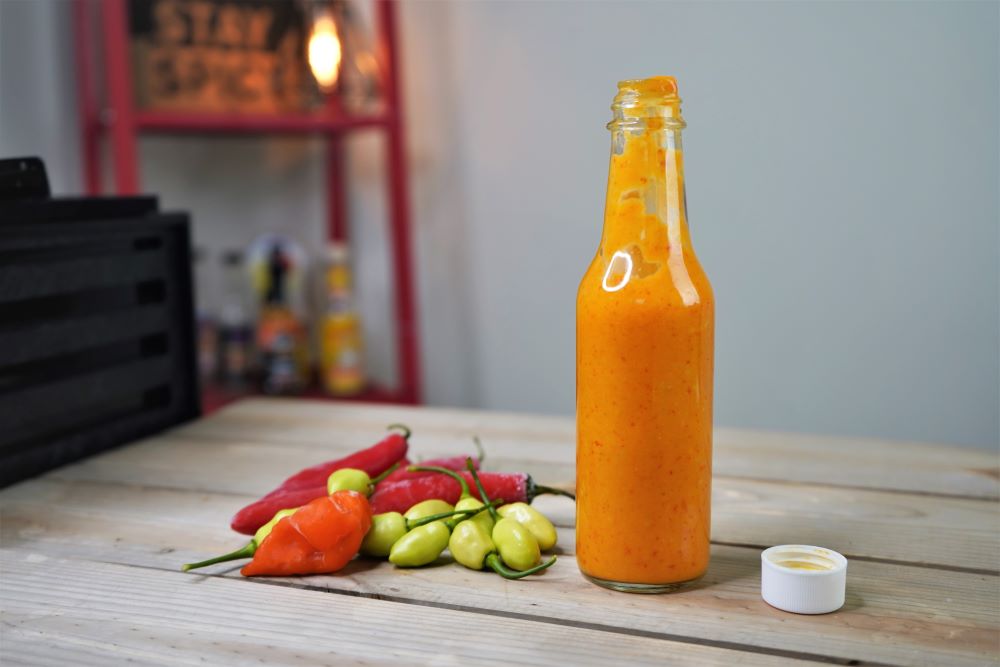
Habanero hot sauce isn’t just about making food as hot as possible. A good hot sauce should bring flavor along with the heat, and that’s exactly what this recipe is designed to do.
Habanero peppers have an intense kick, but they also have a surprisingly fruity character. In this sauce, that flavor is paired with orange juice, fresh lime juice, yellow bell pepper and carrot. Sugar rounds out the acidity and heat, creating a bright, sweet-hot sauce rather than something that simply burns.
The result works particularly well when you want a small amount of sauce to add both heat and flavor to tacos, grilled meats, sandwiches, rice bowls or roasted vegetables.
And yes, a little can go a long way.
What Does Habanero Hot Sauce Taste Like?
Habaneros are known for their heat, but focusing only on how spicy they are misses half the story.
They have a distinctive fruity, almost tropical flavor underneath that heat. That’s one reason citrus works particularly well with them.
Orange juice provides sweetness and fruitiness, while lime juice brings sharper acidity. The yellow bell pepper adds pepper flavor and body without dramatically increasing the heat.
Then there’s the carrot.
It might sound like an unusual hot sauce ingredient, but it provides natural sweetness and helps give the finished sauce more body once everything is blended.
The result is a sauce that’s hot, tangy, slightly sweet and fruity at the same time.
How Hot Is a Habanero Pepper?
Habaneros are much hotter than common peppers such as jalapeños, so don’t treat one as if it were an ordinary chili.
Individual peppers can also vary in heat. That means two batches made with apparently identical habaneros won’t necessarily taste exactly the same.
If you’re unsure about your tolerance, starting cautiously is much easier than trying to rescue a sauce that has become painfully hot.
You can begin with less habanero, blend the sauce and decide whether you want more heat in a future batch.
Remember: you can always make the next batch hotter. Taking heat back out of a finished hot sauce is much harder.
Handle Habaneros Carefully
This is one ingredient where a little caution makes cooking considerably more pleasant.
Wear disposable gloves when cutting habaneros, especially if you’re sensitive to hot peppers. Avoid touching your eyes, nose and face while preparing them.
Afterward, thoroughly wash your knife, cutting board and anything else that came into contact with the pepper.
And don’t assume a quick rinse of your fingers solves everything. The compounds responsible for the burning sensation can remain on surfaces and skin.
It’s much better to spend a minute being careful than to rub your eye ten minutes later and suddenly discover just how effective a habanero can be.
How to Make Habanero Hot Sauce Less Spicy
The simplest solution is also the best: use less habanero.
You can also remove the pale inner membranes when preparing the pepper. This can help reduce some of the intensity, although a habanero-based sauce will obviously remain hot.
The other ingredients in this recipe also help balance the heat.
Bell pepper and carrot add volume without adding significant heat, while orange juice, lime and sugar create a sweet-and-sour background for the chili.
If you’re experimenting with the recipe for the first time, don’t measure success by how much heat you can tolerate. The better question is whether you can still taste everything else.
Why Orange Juice and Lime Juice?
Acidity is one of the things that keeps a hot sauce tasting lively instead of heavy.
Here we’re using two citrus flavors for slightly different jobs.
Orange juice contributes sweetness and a softer citrus character that complements the natural fruitiness of habanero. Lime juice is sharper and brighter, cutting through both the sweetness and the heat.
Together, they create more complexity than either juice would provide on its own.
It’s also why I’d use fresh lime juice when possible. Lime is a noticeable part of the flavor rather than just a token splash of acidity.
Why Is There Carrot in This Hot Sauce?
Carrot performs a few useful jobs at once.
As it cooks, it softens and blends into the sauce, adding body without requiring a large amount of thickener. Its natural sweetness also works well with orange and helps balance the more aggressive elements of the habanero.
This means the sauce can become smooth and substantial rather than simply being spicy citrus liquid.
The important part is cooking the carrot until it’s genuinely tender before blending.
If it’s still hard, achieving a silky texture becomes much more difficult.
How Thick Should Habanero Hot Sauce Be?
There isn’t one perfect consistency.
For a pourable table sauce, stop cooking while it’s still relatively loose. If you want something thicker for sandwiches, burgers or dipping, simmer it a little longer after blending.
Just remember that the sauce thickens somewhat as it cools.
Don’t keep reducing a hot sauce until it has exactly the texture you want when cold. You may end up with something considerably thicker than expected.
If you’ve accidentally made it too thick, a small amount of water or citrus juice can help loosen it again.
Blending Hot Sauce Safely
The vegetables need to be soft before blending, but that creates another issue: you’re dealing with hot liquid.
Don’t casually pour a boiling mixture into a tightly sealed blender and switch it on.
Allow the mixture to cool somewhat first and follow the manufacturer’s instructions for blending warm or hot liquids. Steam needs somewhere to escape.
Once everything has been blended smooth, the sauce can go back into the saucepan for its final simmer.
What Can You Eat With Habanero Hot Sauce?
This sauce is versatile because it brings acidity and sweetness as well as heat.
Try a small amount with tacos, burritos or quesadillas. It can brighten grilled chicken or other grilled meats and works nicely with roasted vegetables.
A few drops can wake up a rice bowl, eggs or a sandwich without turning the sauce into the entire meal.
It can also be mixed into mayonnaise, yogurt-based sauces or other dips when you want its flavor with less concentrated heat.
Start small.
It’s much easier to add another spoonful than to discover that your dinner has become an endurance event.
How to Store Homemade Habanero Hot Sauce
This is one area where it’s worth being conservative.
Transfer the cooled sauce to a clean container with a tight-fitting lid and keep it refrigerated.
Always use a clean utensil when taking sauce from the container. If you notice mold, unexpected fermentation, an unusual odor or another sign of spoilage, discard it.
I wouldn’t treat this recipe as a shelf-stable canned sauce. Safe room-temperature canning depends on factors such as acidity, processing method and a properly tested recipe. Simply putting homemade hot sauce into a sterilized bottle doesn’t automatically make it shelf stable.
For this recipe, think of it as a fresh, refrigerated hot sauce.
Frequently Asked Questions
Can I use more than one habanero?
Yes, but the increase in heat can be dramatic. If you’re making the recipe for the first time, preparing it with the specified amount gives you a useful baseline before experimenting with hotter versions.
Can I make this sauce milder?
Yes. Reduce the amount of habanero while keeping the bell pepper and other ingredients. Removing the inner membranes of the habanero can also help reduce some of the heat.
Why is my hot sauce too thick?
It was probably reduced a little too far. Remember that the sauce thickens further as it cools. You can gradually blend in a small amount of water or citrus juice until you reach the consistency you want.
Why is my hot sauce too thin?
Return it to the saucepan and simmer gently for a little longer. Stir frequently as it reduces so the sugar doesn’t catch on the bottom of the pan.
Do I need to strain the sauce?
Not necessarily. If your blender produces a smooth texture, you can use the sauce as it is. If you prefer an especially silky, thin sauce, you can pass it through a fine-mesh strainer after blending.
Can I store this hot sauce at room temperature?
I wouldn’t do that with this recipe. Keep it refrigerated. Making a shelf-stable hot sauce safely requires a recipe and preservation process specifically designed and validated for that purpose.

Habanero Hot Sauce Recipe: A Spicy Delight
10
servings10
minutes25
minutes35
minutesThis homemade habanero hot sauce combines the intense heat and fruity flavor of habanero pepper with sweet bell pepper, carrot, orange and lime. The result is a bright, sweet-hot sauce with citrus notes that works well with tacos, grilled meats, sandwiches, rice dishes and roasted vegetables.
Ingredients
1 medium habanero pepper, stem removed and roughly chopped
1 medium yellow bell pepper, seeded and chopped
1/2 cup caster sugar
1 cup orange juice
7 tbsp water
7 tbsp fresh lime juice
Directions
- Prepare the peppers:
Wear disposable gloves when handling the habanero. Remove the stem and roughly chop the pepper, avoiding contact with your eyes and face. Chop the bell pepper and carrot into small pieces so they cook evenly. - Combine the ingredients:
Add the habanero, bell pepper, sugar, carrot, orange juice, water and lime juice to a saucepan. Stir to combine. - Simmer:
Bring the mixture to a gentle boil, then reduce the heat and simmer for about 10–15 minutes, stirring occasionally, until the carrot and peppers have softened. - Blend Carefully:
Place the smooth liquid back to the pan and bring to a gentle boil. Simmer for 5-10 minutes, stirring almost continuously. - Adjust the consistency:
Return the blended sauce to the saucepan and simmer gently for another 5–10 minutes, stirring frequently, until it reaches your preferred consistency. Remember that the sauce will thicken slightly as it cools. - Cool and store:
Allow the sauce to cool, then transfer it to a clean container or bottle. Keep refrigerated.
Notes
- Control the heat: Habanero peppers are very hot. For a milder sauce, start with less habanero rather than adding extra after blending. Removing the inner membranes can also reduce some of the heat, although the sauce will still be spicy.
- Protect your hands: Wear gloves while cutting habaneros and wash your knife, cutting board and hands thoroughly afterward. Avoid touching your eyes or face while working with the peppers.
- Storage: Keep the finished sauce refrigerated in a clean, tightly closed container. Always use a clean utensil when serving it and discard the sauce if you notice mold, unusual fermentation, off odors or other signs of spoilage.