
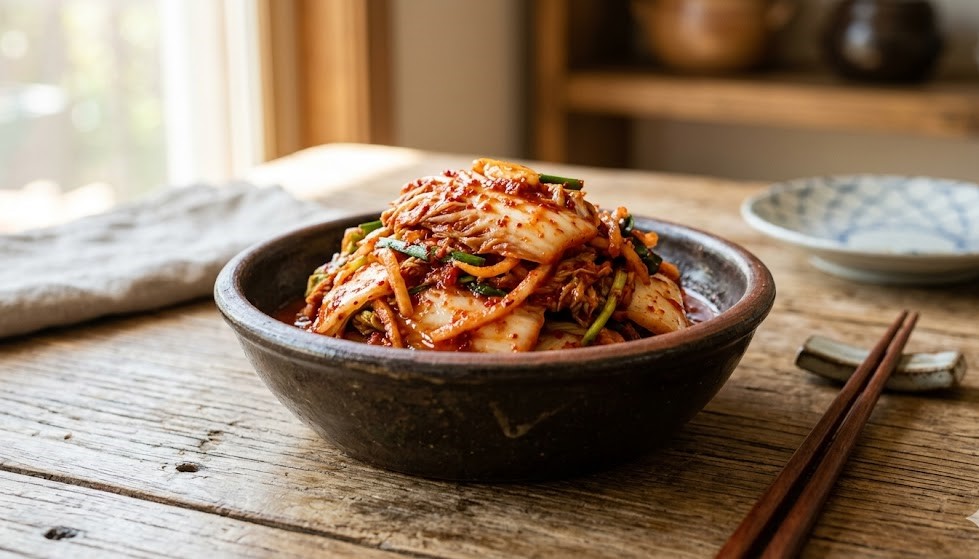
Kimchi Recipe (Napa Cabbage Kimchi) is a traditional Korean fermented dish made with napa cabbage, garlic, ginger, chili flakes, and seasonings. This kimchi recipe (napa cabbage kimchi) creates a flavorful combination of spicy, tangy, and savory tastes. It’s a staple side dish in Korean cuisine and is enjoyed with rice, noodles, soups, and many other meals.
Origin of Napa Cabbage Kimchi
Kimchi has been part of Korean culinary tradition for over a thousand years. Originally developed as a way to preserve vegetables for winter, kimchi evolved with the introduction of chili peppers in Korea during the 16th century. Napa cabbage kimchi eventually became the most popular version.
Why It’s Loved
Kimchi recipe (napa cabbage kimchi) is loved for its bold flavor, crunchy texture, and probiotic benefits from fermentation. It adds spice and depth to many dishes and is considered both nutritious and delicious.
Also Read: Chicken & Ginger Fried Rice: A Culinary Delight
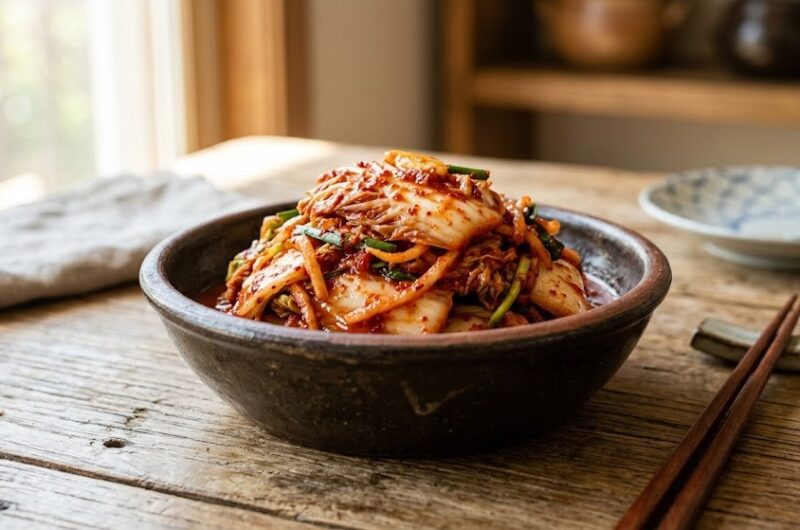
Kimchi Recipe (Napa Cabbage Kimchi)
6
servings25
minutes0
minutes40
kcalIngredients
1 medium napa cabbage
1/4 cup sea salt
4 cups water
1 tbsp grated ginger
4 cloves garlic, minced
2 tbsp Korean red pepper flakes (gochugaru)
1 tbsp fish sauce
1 tsp sugar
3 g reen onions, chopped
1 small carrot, julienned
Directions
- Cut the napa cabbage into large pieces.
- Dissolve sea salt in water and soak the cabbage for 2–3 hours until softened.
- Rinse the cabbage thoroughly and drain well.
- In a bowl, mix garlic, ginger, Korean chili flakes, fish sauce, and sugar to form a paste.
- Add chopped green onions and julienned carrot to the paste.
- Coat the cabbage pieces evenly with the seasoning mixture.
- Pack the seasoned cabbage into a clean jar or container.
- Leave at room temperature for 1–2 days to ferment, then store in the refrigerator.
Notes
- Tip: Use gloves while mixing to avoid chili irritation.
- Storage: Store in the refrigerator for up to 2–3 weeks as it continues to ferment.
- Serving Suggestion: Serve as a side dish with rice, noodles, or Korean barbecue.

)