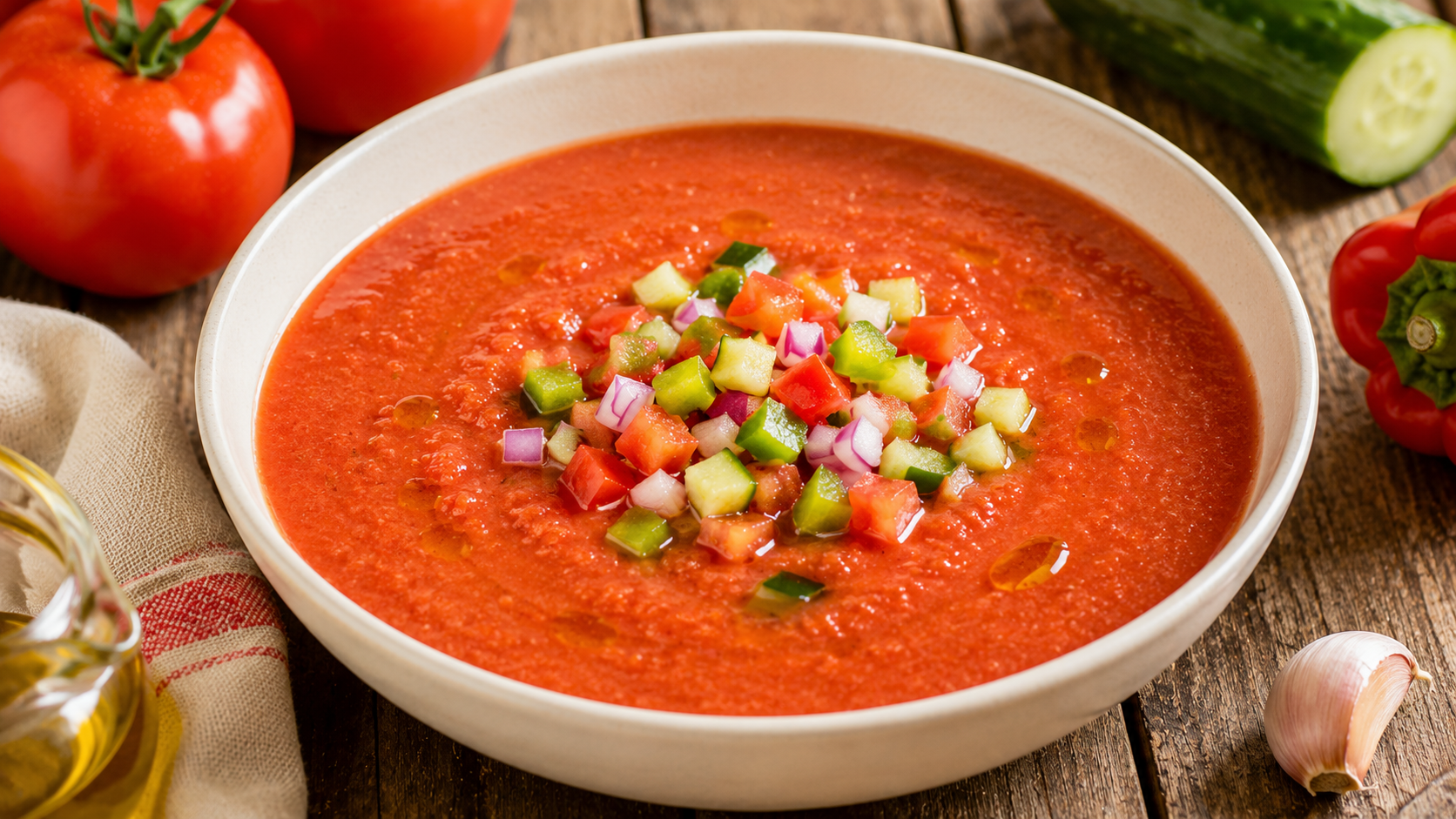
When the summer heat rolls in, nothing beats a bowl of classic Gazpacho—a light, refreshing, and incredibly vibrant chilled tomato soup that requires only 15 minutes of hands-on preparation. Originating from the sun-drenched southern Spanish region of Andalusia, this raw vegetable soup has become a beloved staple throughout Spain and Portugal.
While there are millions of regional variations—including fruit-forward watermelon gazpacho, a chilled almond blend known as ajo blanco, or the creamier egg-and-ham topped salmorejo—the timeless tomato version remains a summer dinner savior. It features a complex, herbal flavor profile that highlights peak-season produce.

The Humble History of Gazpacho
According to Mediterranean food scholars, gazpacho originally began as a rustic “poor man’s food” crafted by vineyard and olive plantation laborers. Long before tomatoes arrived in Europe, workers would pound stale bread, water, garlic, and olive oil together in a wooden bowl to sustain themselves in the fields. Leftover fragments of whatever vegetables were on hand were crushed into the liquid. Today, modern kitchen tools have streamlined the process, turning this historic, practical meal into an elegant, celebrated dish.
Choosing Your Ingredients
Because this is a completely no-cook soup, the final flavor depends heavily on the quality of your raw ingredients.
- The Tomatoes: You will need about 2 pounds of ripe, flavorful tomatoes. While fleshy Roma tomatoes are traditional, plum, beefsteak, or a custom combination of varieties work beautifully—just ensure they are fragrant, plump, and heavy for their size.
- The Crunch: A refreshing blend of seedless English cucumber, green bell pepper, and a single rib of celery. While celery is an untraditional addition, it lends a beautiful lightness to the soup base.
- The Aromatics: Roughly chopped garlic cloves and green onions (using both the white and green parts) add just the right amount of savory sharpness.
- The Bread: Stale, day-old artisan bread with the crusts removed is vital for traditional thickening. The bread is briefly soaked in water and squeezed dry before blending to emulsify the vegetables. Note: For a low-carb or gluten-free alternative, you can omit the bread entirely or swap in your favorite gluten-free brand.
- The Finish: High-quality Spanish Hojiblanca extra virgin olive oil provides a fruity, peppery finish, while authentic sherry vinegar (Vinagre de Jerez) adds a sharp, acidic punch.
- The Spices: A simple seasoning of salt, black pepper, and ground cumin balances the acidity. Add a pinch of sugar to round out the tomato flavors, and optionally incorporate cayenne pepper if you enjoy a touch of heat.
Perfect Spanish Menu Pairings
Turn your chilled soup into a complete Mediterranean gathering with these classic accompaniments:
- The Tapas Spread: Serve your gazpacho alongside a platter of pan con tomate, marinated anchovies (boquerones), or savory Spanish tuna empanadillas.
- The Main Feast: Pair it with a vibrant avocado and tuna salad, and make it a party centerpiece with a traditional seafood paella.
- The Drinks: Keep things refreshing with chilled Spanish favorites like tinto de verano, white sangria, or a bold classic red sangria.
Also Read : The Ultimate Classic Pound Cake Recipe

Authentic Andalusian Chilled Spanish Gazpacho
6
servings15
minutes1
hour75
kcalIngredients
4 to 5 slices stale artisan bread, crusts removed
1/2 cup water (for soaking the bread)
5 l arge ripe tomatoes (about 2 lbs), skinned
1/2 English cucumber, peeled and chopped
1 c elery stalk, chopped
1 g reen bell pepper, cored, seeded, and roughly chopped
2 g reen onions, trimmed and roughly chopped (plus extra for garnish)
2 g arlic cloves, peeled and chopped
1/2 cup high-quality extra virgin olive oil (plus extra for drizzling)
2 tbsp sherry vinegar
1/2 tsp ground cumin
1/2 tsp cayenne pepper (optional, for heat)
1 pinch granulated sugar
Kosher salt and freshly cracked black pepper, to taste
Small handful of fresh mint leaves, torn (optional garnish)
Small handful of fresh cilantro leaves, chopped (optional garnish)
Directions
- Soak the Bread: Place the stale artisan bread slices into a small bowl and pour 1/2 cup of water over them. Let the bread soak for a couple of minutes to soften while you prepare the tomatoes. Once soft, squeeze the bread firmly with your hands to wring out and discard the excess water. Set the compressed bread aside.
- Blanch and Peel the Tomatoes: Bring a large pot of water to a rolling boil over high heat. Carefully drop in your 5 whole tomatoes and let them boil for exactly 40 seconds. Use a slotted spoon to immediately remove the tomatoes from the boiling water and set them aside on a plate for a minute to cool. Once they are cool enough to safely handle, the skin will wrinkled and you can easily peel it off with your fingers.
- Puree the Base: In the bowl of a large food processor or high-speed blender, combine the peeled tomatoes, chopped cucumber, celery, green bell pepper, green onions, and garlic cloves. Place the soaked bread directly on top of the vegetables.
- Emulsify: Pour in the 1/2 cup of extra virgin olive oil and the 2 tablespoons of sherry vinegar. Run the food processor for a few seconds to break down the vegetables, then add the salt, black pepper, ground cumin, optional cayenne pepper, and a pinch of sugar. Blend continuously until the soup reaches your desired consistency. (Note: Blend longer for a perfectly silk-smooth soup, or pulse fewer times if you prefer a rustic, textured gazpacho.)
- Adjust and Taste: Taste the soup and adjust the seasonings if needed. If the gazpacho feels too thick for your preference, add a tiny splash of cold water and pulse briefly to incorporate.
- Chill: Transfer the pureed soup into a glass pitcher, large canning jars, or an airtight container. Cover tightly and place in the refrigerator to chill for at least 1 hour, or ideally a few hours overnight to let the complex, herbal flavors fully develop.
- Serve Chilled: Give the chilled gazpacho a thorough stir. Pour into chilled serving bowls for a light meal, or divide among small shooter glasses to serve as an elegant party appetizer. Finish each portion with a generous drizzle of extra virgin olive oil and a scatter of chopped green onions, fresh mint, or cilantro.
Notes
- Make-Ahead Advantage: Because the raw flavors meld and deepen over time, gazpacho is a fantastic make-ahead dish for entertaining. You can prepare it 1 to 2 days before your gathering without any loss of quality.
- Storage Lifespan: Leftover soup can be kept stored in a tightly sealed glass jar or container in the refrigerator for up to one week.
- Freezer Instructions: Gazpacho can be frozen for up to 6 months. Ensure the soup is blended completely smooth before transferring it to freezer-safe jars, leaving a bit of headspace for expansion. Thaw completely in the fridge and give it a quick whirl in the blender before serving to re-emulsify the olive oil.