
Butter chicken is one of those dishes that looks as though it must require a complicated restaurant kitchen, yet the basic idea is surprisingly approachable. Tender pieces of spiced chicken meet a smooth tomato-based sauce enriched with cream, ghee, warm spices, and dried fenugreek.
What makes a good butter chicken special is not simply adding more butter or cream. The real flavor comes from building the dish in stages. The chicken is marinated first, then browned separately, while the sauce develops its own layers of onion, ginger, garlic, tomatoes, and spices. Only toward the end do the two come together.
The result should be rich and creamy without becoming heavy, with enough tomato acidity and spice to balance the dairy.
Why This Butter Chicken Recipe Works
There are several small details that make a noticeable difference.
First, the yogurt-based marinade does more than add flavor. It coats the chicken with garlic, ginger, and spices before the meat ever reaches the pan.
Second, browning the chicken in batches is worth the extra few minutes. If too much chicken goes into the pan at once, it releases moisture and begins to steam. Giving the pieces some space produces better browning and leaves flavorful bits in the pan that become part of the sauce.
Finally, the chicken isn’t cooked completely during this first stage. It finishes gently in the sauce, helping it stay tender rather than becoming dry.
Choosing the Chicken
Boneless, skinless chicken thighs are particularly well suited to butter chicken. Their slightly higher fat content makes them forgiving and helps them remain juicy while the sauce finishes cooking.
Chicken breast works too. If you use breast meat, pay a little more attention to cooking time because it can dry out more quickly.
Whichever you choose, cut the chicken into reasonably even bite-sized pieces. Similar-sized pieces cook at roughly the same rate, so you won’t end up with some pieces overcooked while others are still catching up.
Building a Rich, Smooth Sauce
The sauce deserves just as much attention as the chicken.
Let the onion soften and develop a little color before adding the garlic, ginger, and spices. When the ground spices hit the warm fat, they only need a short time to become fragrant. Cooking them briefly at this stage helps bring their flavors into the sauce.
The crushed tomatoes then need time to simmer and reduce. Don’t rush this part. You’re looking for a sauce that has noticeably thickened rather than something watery that will later need excessive cream to give it body.
Blending the tomato mixture produces the smooth texture associated with butter chicken. If your blender struggles with the thick sauce, add water a tablespoon or two at a time rather than pouring in a large amount at once.
Be Careful When Blending Hot Sauce
If you’re using a countertop blender, allow the mixture to cool slightly and don’t overfill the container. Hot liquids create steam and pressure. Working in smaller batches is safer and also makes it easier to achieve a smooth consistency.
An immersion blender can make this step simpler because the sauce can be blended directly in the cooking vessel.
Don’t Skip the Kasoori Methi
Dried fenugreek leaves, usually sold as kasoori methi, may look like a minor ingredient, but they contribute a distinctive aroma to the finished sauce.
Crush the dried leaves between your fingers before stirring them in near the end of cooking. This helps release their aroma.
If you cannot find kasoori methi, you can still make the recipe without it. The finished butter chicken will simply have a somewhat different flavor profile.
How Spicy Is Butter Chicken?
It doesn’t have to be particularly hot.
The amount and type of chili powder make a big difference, so consider the heat level of the chili you’re using rather than automatically adding more. It’s much easier to increase the heat at the end than to rescue a sauce that has become overwhelmingly spicy.
If you’re cooking for people with different preferences, start conservatively and offer additional chili alongside the finished dish.
How to Tell When the Sauce Is Ready
Rather than relying only on the clock, watch the texture.
Before the cream goes in, the tomato mixture should have reduced enough that it no longer looks thin and watery. After blending and adding the cream, the finished sauce should coat the chicken rather than immediately running off it.
If it becomes too thick, add a small splash of water. If it is too thin, let it simmer gently for a little longer.
Avoid aggressively boiling the sauce after adding the cream. Gentle heat is all that’s needed to finish cooking the chicken and bring everything together.
Common Butter Chicken Mistakes
Crowding the chicken in the pan: This encourages steaming instead of browning. Cook it in batches if necessary.
Cooking the chicken completely before adding it to the sauce: The chicken still has another cooking stage ahead of it. Browning it first and finishing it in the sauce reduces the chance of dry meat.
Rushing the tomato sauce: Give the tomatoes time to reduce and concentrate before blending.
Burning the spices: Ground spices become fragrant quickly. They don’t need several minutes over high heat.
Adding too much water before blending: Start with only a small amount. You can always thin the sauce later.
Boiling the finished cream sauce too aggressively: Once the dairy has been added, keep the heat gentle.
What to Serve With Butter Chicken
Basmati rice is an easy choice because it absorbs the creamy sauce without competing with its spices. Naan or another flatbread is excellent for the same reason.
For a fresher contrast, serve butter chicken with cucumber, a simple salad, or a cooling yogurt-based side dish.
A little fresh cilantro added just before serving also brings color and freshness to the rich sauce.
Storing and Reheating
Allow leftovers to cool before transferring them to a covered container and refrigerating them. When reheating, use gentle heat and stir occasionally.
The sauce may thicken considerably in the refrigerator. A small splash of water can loosen it as it reheats.
Avoid repeatedly heating and cooling the entire batch. If you only need one serving, reheat that portion rather than the whole container.
Final Tip
Butter chicken rewards patience more than complexity. Give the chicken time to marinate, give it enough room to brown, and let the tomato sauce reduce before reaching for the cream.
Those few steps are what turn a collection of familiar ingredients into a smooth, aromatic sauce with tender pieces of chicken throughout.
Also Read: Bruschetta Recipe
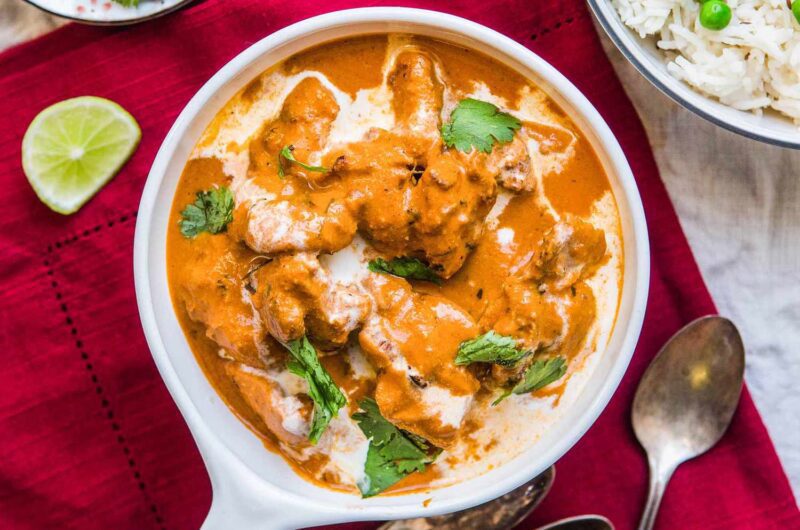
Butter chicken Recipe
4
servings45
minutes40
minutes1
hour25
minutesButter chicken combines tender spiced chicken with a rich, creamy tomato sauce flavored with garam masala, ginger, garlic and dried fenugreek. Browning the marinated chicken first adds extra flavor, while finishing it gently in the sauce keeps the meat tender and gives the dish its characteristic creamy texture.
Ingredients
- For the chicken marinade:
28 oz (800g) boneless and skinless chicken thighs or breasts cut into bite-sized pieces
1/2 cup plain yogurt
1 1/2 tablespoons minced garlic
1 tablespoon minced ginger (or finely grated)
2 teaspoons garam masala
1 teaspoon turmeric
1 teaspoon ground cumin
1 teaspoon red chili powder
1 teaspoon salt
- For the sauce:
2 tablespoons olive oil
2 tablespoons ghee (or 1 tbs butter + 1 tbs oil)
1 large onion, sliced or chopped
1 1/2 tablespoons garlic, minced
1 tablespoon ginger, minced or finely grated
1 1/2 teaspoons ground cumin
1 1/2 teaspoons garam masala
14 oz (400 g) crushed tomatoes
1 teaspoon ground coriander
1 teaspoon red chili powder (adjust to your taste preference)
1 1/4 teaspoons salt (or to taste)
1 cup heavy cream
1 tablespoon sugar
1/2 teaspoon kasoori methi (or dried fenugreek leaves)
Directions
- Marinate the chicken
Combine the chicken with yogurt, garlic, ginger, garam masala, turmeric, cumin, chili powder and salt. Mix until every piece is well coated. Cover and marinate for at least 30 minutes. For deeper flavor, refrigerate for several hours or overnight. - Brown the chicken
Heat the olive oil in a large skillet over medium-high heat. Cook the chicken in batches so the pieces have enough room to brown rather than steam. Cook for about 3 minutes per side. The chicken does not need to be fully cooked yet. Transfer it to a plate. - Build the sauce
Reduce the heat to medium and add the ghee. Add the onion and cook for about 5–7 minutes, stirring occasionally, until softened and lightly golden. Scrape up the browned bits left by the chicken. - Add the aromatics and spices
Stir in the garlic and ginger and cook for about 1 minute. Add the ground coriander, cumin and garam masala. Stir for another 20–30 seconds, just until the spices become fragrant. - Cook the tomatoes
Add the crushed tomatoes, chili powder and salt. Simmer gently for 10–15 minutes, stirring occasionally, until the sauce has reduced and thickened. - Blend until smooth
Remove the pan from the heat and carefully blend the sauce until smooth. If necessary, add a small amount of water to help it blend. Return the sauce to the pan. - Finish the butter chicken
Stir in the cream, sugar and crushed kasoori methi. Return the chicken and any accumulated juices to the sauce. Simmer gently for another 8–10 minutes, or until the chicken is completely cooked and the sauce is thick and creamy. - Serve
Taste and adjust the salt or chili if needed. Garnish with fresh cilantro and serve hot with basmati rice or naan.
Notes
- Chicken thighs are especially forgiving in this recipe because they remain juicy during simmering, but boneless chicken breast can also be used. Avoid overcrowding the pan when browning the chicken; working in batches helps develop more flavor.
- Kasoori methi (dried fenugreek leaves) gives butter chicken a distinctive aroma. Crush the leaves between your fingers before adding them to the sauce. If you cannot find it, the dish can still be made without it, although the flavor will be slightly different.
- For a lighter sauce, part or all of the heavy cream can be replaced with evaporated milk. Add dairy over gentle heat and avoid a hard boil after adding it.