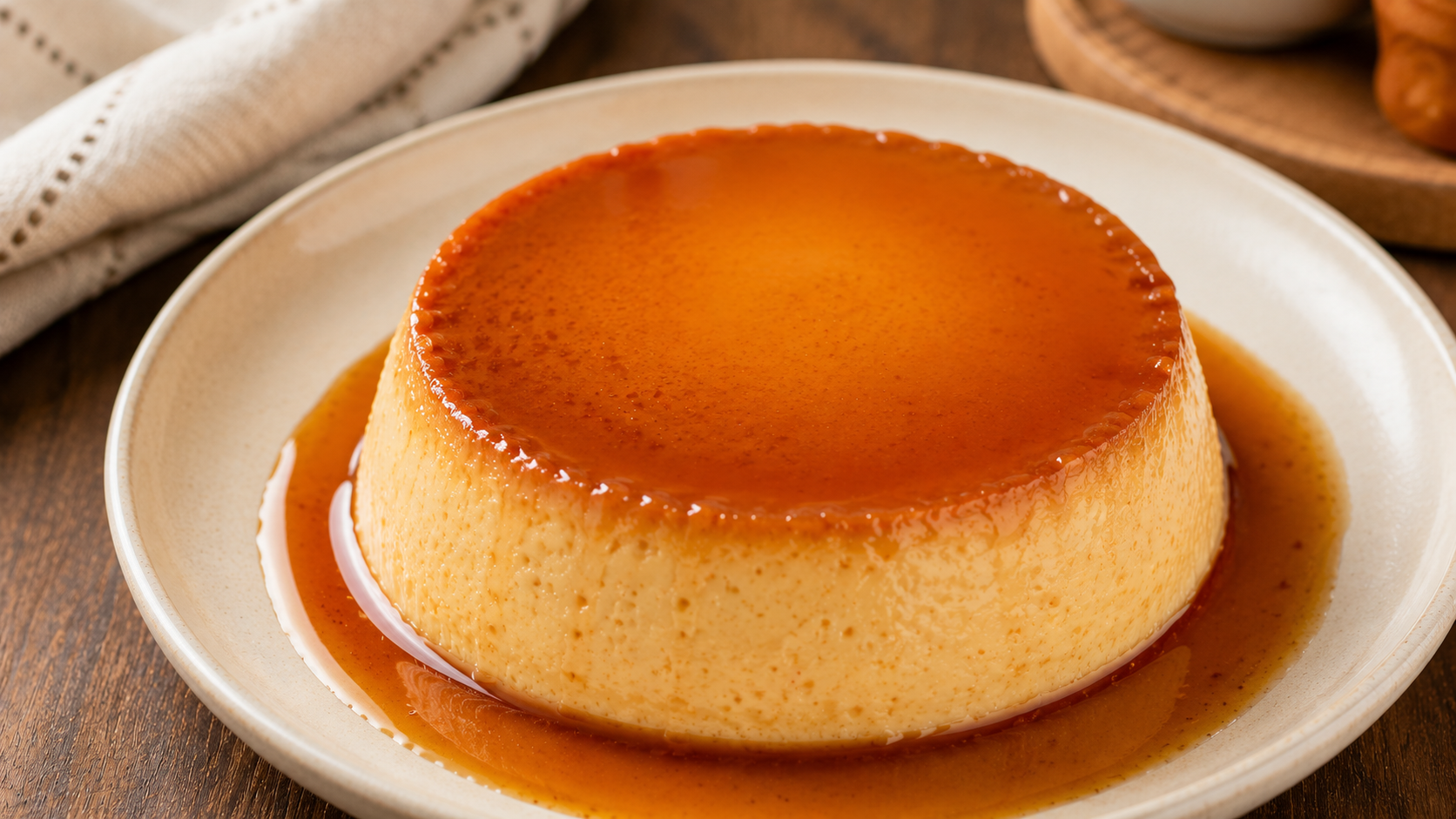
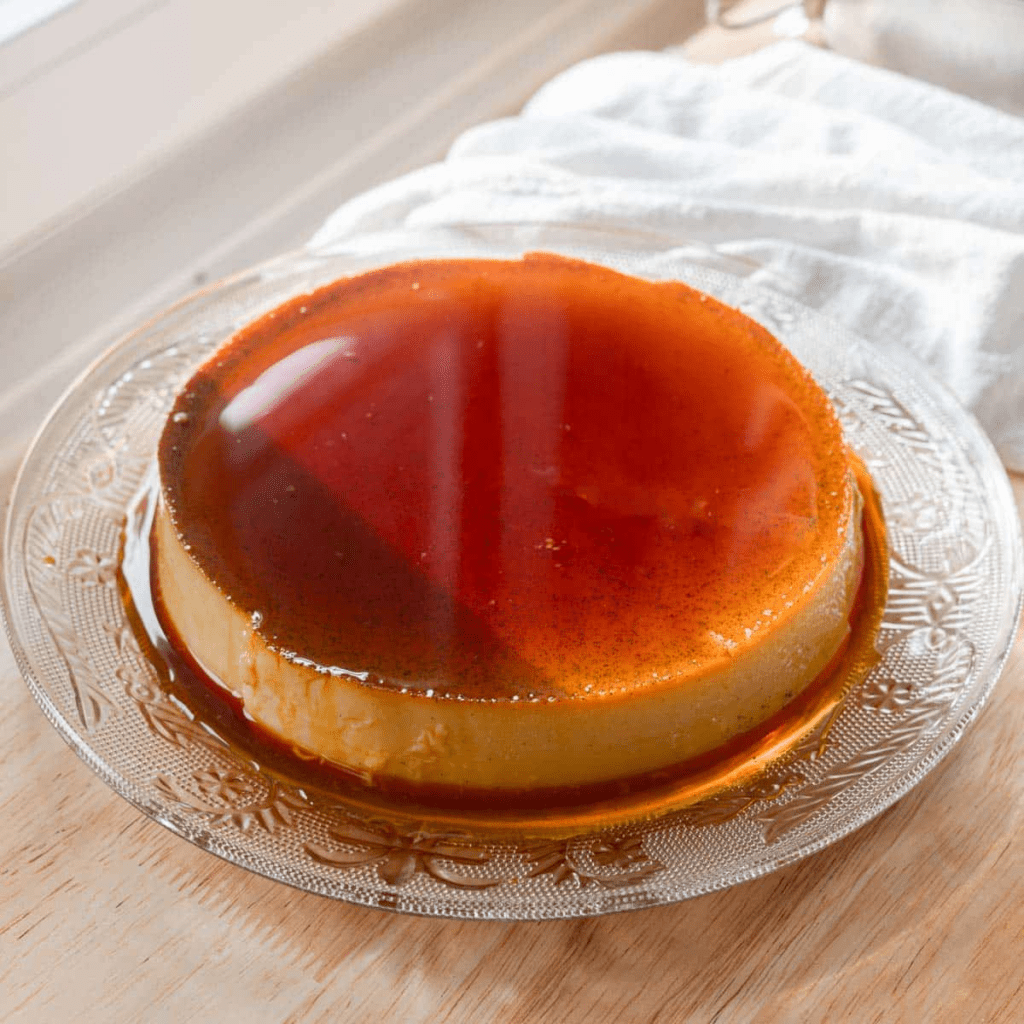
Mexican flan is one of those timeless, decadent desserts that looks far more intimidating to create than it actually is. If you are looking for a show-stopping, make-ahead treat for your next gathering, this classic vanilla flan is the ultimate solution. It features an exceptionally rich, velvety custard coated in a glistening, sweet caramel glaze.
The magic of this dessert happens right in the oven. You begin by pouring a liquid sugar-and-water caramel into your baking pan, where it cools and hardens. As the layered milk mixture bakes on top of it, that hard shell slowly melts back down, combining with the moisture of the custard to form a luscious, pourable syrup that beautifully drapes over the dessert when it is inverted onto a serving platter.
The History: Spanish vs. Mexican Flan
While flan is famously celebrated across Latin America today, it is actually an ancient dessert that traces its roots all the way back to the Roman Empire. The recipe evolved in Europe, and it was the Spaniards who first introduced the genius idea of topping the baked egg custard with a sweet caramel glaze.
When Spanish colonization brought the dish to Mexico, the recipe was modified to adapt to regional ingredients. Today, there are a few distinct differences between the two varieties:
- Spanish Flan: Typically relies on a traditional combination of granulated white sugar, whole milk (or heavy cream), whole eggs, egg yolks, and vanilla extract.
- Mexican Flan: Streamlines the process by utilizing whole eggs, evaporated milk, and sweetened condensed milk, which results in a distinctively rich, dense, and ultra-creamy texture.
Essential Ingredients
Because this recipe utilizes simple, everyday pantry staples, choosing the right types of dairy and sugar ensures structural success.
- Granulated Sugar: Standard white sugar is required to make the smooth caramel base. Avoid coarser varieties like turbinado sugar, as they do not dissolve or caramelize as evenly.
- Large Eggs: Eggs act as the natural structural binder, providing the density needed to keep the custard smooth, firm, and sliceable.
- Sweetened Condensed Milk: This thick, sweet canned milk provides the perfect level of internal sweetness and body for the custard mixture.
- Evaporated Milk: Do not substitute this with standard whole milk! Evaporated milk has had a specific percentage of its water content removed, which is absolutely vital for achieving the proper, traditional Mexican flan consistency.
- Vanilla Extract: Since vanilla is the primary flavor notes of the custard, opt for a high-quality pure vanilla extract to get the most aromatic results.
Pro Tips for a Perfectly Smooth Custard
- Watch the Caramel Like a Hawk: When melting your sugar and water on the stovetop, never step away. In a matter of seconds, sugar can cross the line from a perfectly sweet, amber-hued syrup to a bitter, burnt mess. Use a light-colored saucepan to help you accurately track the color as it deepens.
- Strain Out the Air Bubbles: Whether you mix your custard using a traditional countertop blender or a hand whisk, air bubbles will naturally form on the surface. To ensure your flan is perfectly smooth without unappealing pockets of air, pour the liquid mixture through a fine-mesh strainer directly into the cake pan over your hardened caramel.
- Gently Tap the Pan: Before popping the dessert into the oven, give the cake pan a few gentle taps flat against your kitchen counter. This encourages any deeply trapped air bubbles within the raw custard to float to the top and escape.
- Always Use a Water Bath: To protect the delicate egg proteins from curdling or baking unevenly, you must use a water bath (bain-marie). Place your cake pan inside a larger roasting pan, and fill the outer pan with roughly 1 inch of hot water.
Also Read : The Ultimate Classic Pound Cake Recipe
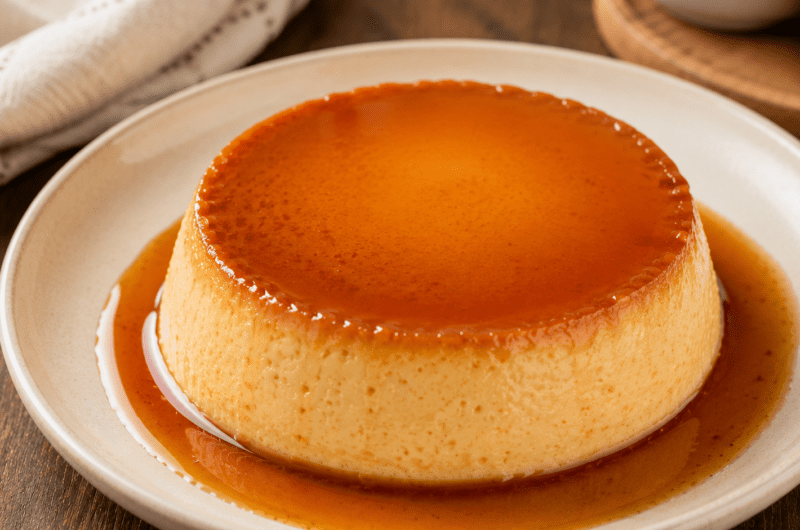
Classic Mexican Vanilla Flan
8
servings20
minutes50
minutes338
kcalIngredients
3/4 cup granulated sugar (150g)
1/4 cup water (for the caramel)
5 l arge eggs
1 (14-ounce / 396g) can sweetened condensed milk
1 (12-ounce / 354g) can evaporated milk
1 tbsp pure vanilla extract
Hot water (for the roasting pan water bath)
Directions
- Preheat: Preheat your oven to 350°F (175°C).
- Dissolve the Sugar: To a medium saucepan, add the 3/4 cup of granulated sugar and 1/4 cup of water. Cook the mixture over medium heat, stirring frequently, for about 2 minutes until the sugar completely dissolves.
- Caramelize: Increase the stovetop heat to medium-high. Cook for roughly 5 minutes, swirling the pan occasionally, until the bubbling sugar turns a deep, golden-amber color. Tip: If sugar crystals begin forming on the dry sides of your pan, use a wet pastry brush to gently push them down.
- Coat the Pan: Immediately pour the hot caramel into an ungreased 8-inch or 9-inch round cake pan. Carefully tilt and rotate the pan so the liquid caramel evenly coats the entire bottom surface. Set the cake pan aside to cool and harden completely while you prepare the custard base.
- Blend the Custard: In a blender or a large mixing bowl, combine the 5 large eggs, the can of sweetened condensed milk, the can of evaporated milk, and the tablespoon of vanilla extract. If using a blender, blend on a low speed just until the ingredients are completely homogenous. Let the liquid sit for a few minutes to allow surface foam to settle.
- Assemble the Water Bath: Place your caramel-coated cake pan inside a larger, deep roasting pan. Pour the egg and milk mixture directly through a fine-mesh strainer into the cake pan right over the hardened caramel layer.
- Add Water: Carefully pour hot water into the outer roasting pan until it reaches about 1 inch up the sides of the inner cake pan.
- Bake: Slide the nested pans into the oven and bake for 35 to 40 minutes. The flan is done when the edges are completely firm, but the exact center retains a slight, jelly-like wobble when gently jiggled.
- Cool: Carefully remove the cake pan from the hot water bath and transfer it to a wire cooling rack. Allow it to cool gradually to room temperature on the counter. Once cooled, you can serve it immediately, or cover the pan tightly with plastic wrap and refrigerate it if you prefer it chilled.
- Invert and Serve: To unmold, gently run a thin, sharp knife completely around the inside edges of the cake pan to release the custard. Place your rimmed serving platter upside down directly over the top of the cake pan, then firmly grip both pieces and flip them over in one swift motion. Lift the cake pan away, allowing the liquid caramel sauce to cascade down the sides of the flan. Slice into neat wedges using a sharp knife, wiping the blade clean between each cut.
Notes
- Unmolding a Chilled Flan: If you chose to refrigerate your flan overnight, the caramel on the bottom may stubborn to release. Simply dip the bottom half of the cake pan into a bowl of hot water for 30 to 60 seconds to warm and loosen the caramel before attempting to invert it onto your plate.
- Storage: Cover any leftovers tightly with plastic wrap and store them in the refrigerator for up to 4 days. Freezing is highly discouraged, as the freezing and thawing process breaks down the delicate dairy emulsion, causing the custard to lose its firm, silky texture.
- Flavor Variation (Flan de Queso): For a rich, cheesecake-like spin on this classic, whip 8 ounces of room-temperature cream cheese until completely smooth. Slowly whisk in the evaporated and condensed milks, followed by 6 large eggs and the vanilla extract. Pour over your caramel and bake in the water bath as directed for roughly 50 minutes.